



Have you ever felt uneasy while browsing online, wondering how some ads seem to know just a little too much about you? Maybe you saw an ad for a product you were just thinking about even if you hadn’t searched for it. You’re not alone. Many people feel uneasy when they don’t know who is collecting their data or how it’s being used.
At the same time, businesses and marketers face pressure to reach the right audience, show ads that actually work, and get the most from their advertising budgets. You might think: “If I don’t track people everywhere, how will I know who to show ads to?”
Here’s the good news: privacy‑first advertising offers a solution that protects users’ data while boosting marketing results. This article will explain it in simple, easy-to-understand language, step by step, with examples and practical strategies you can start using today.
1. What is Privacy‑First Advertising?
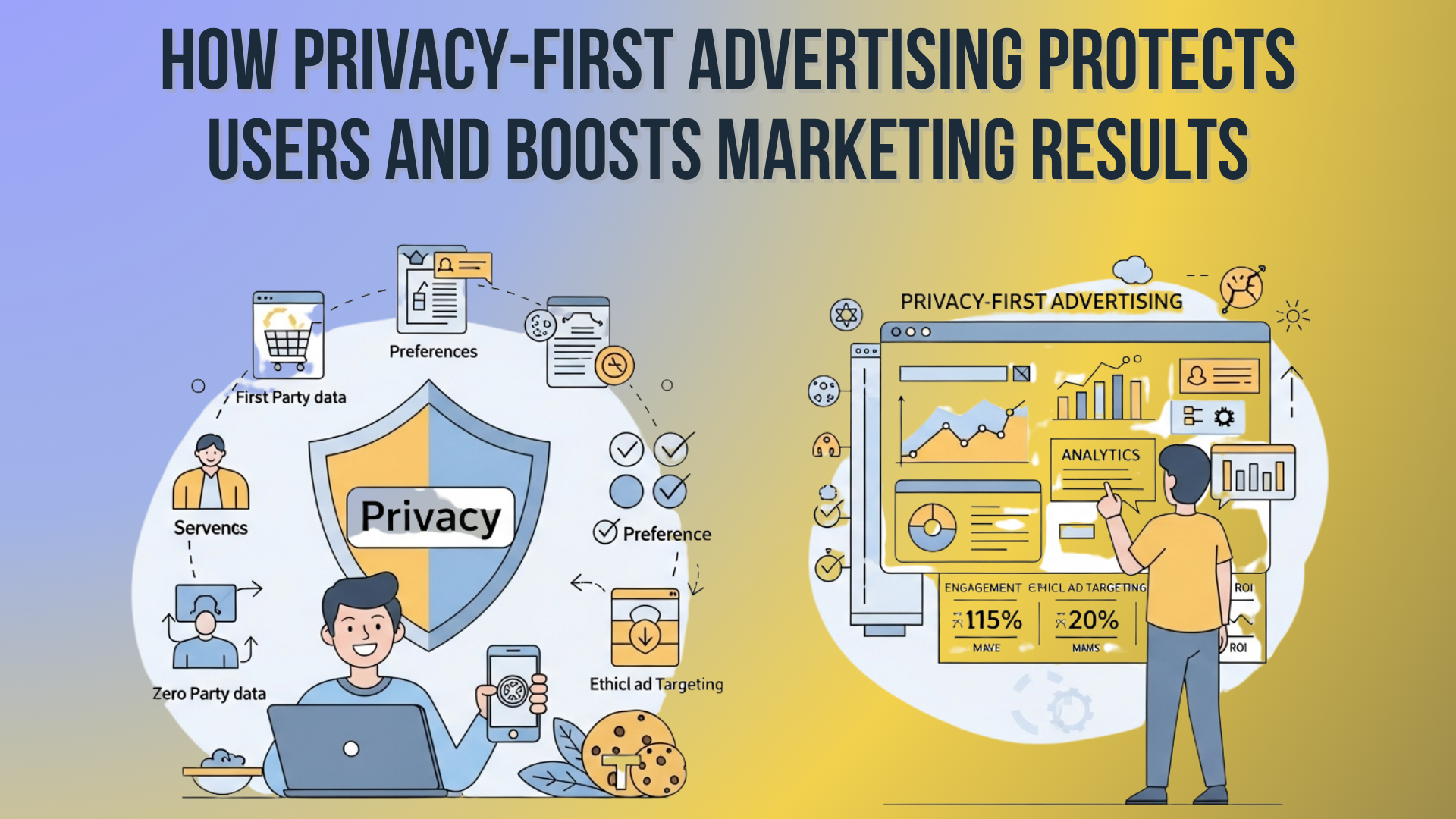
When we say privacy‑first advertising, we mean ads that are created and delivered in a way that puts the user’s data protection and control front and centre. Instead of quietly gathering data from many websites and tracking a person across the internet (which many people dislike and find invasive), privacy‑first advertising focuses on three key ideas: user consent, data you own, and smart targeting methods that don’t rely on spying or excessive tracking.
Key elements:
- User consent & transparency: Before you collect or use someone’s information, you explain clearly what you’ll use it for and ask for permission. For example, you might say: “We’d like to use your email to send offers you might like, and you can opt out anytime.”
- First‑party data: This is data you collect directly from your users, for example, what they do on your website, what they buy, what they click. Because you collected it yourself, you understand it, you own it, and you don’t have to rely on someone else’s data.
- Zero‑party data: This is data someone gives you on purpose for example, they fill out a survey, choose their preferences in a profile, or tell you what types of offers they like. It has high value because it’s given willingly and is often more accurate.
- Contextual or cohort targeting: Instead of following one person across many sites, ads are shown based on the context (what content they’re viewing) or to groups of people with similar interests (cohorts). So you can still reach “people likely to care” without using invasive tracking.
Why this matters:
This approach is important because the internet environment is changing. Browser makers and regulators are limiting old tracking methods (like third‑party cookies). Consumers are more aware and more upset when their data is misused. When your advertising respects privacy, it helps build trust and still allows you to serve relevant messages. In fact, research shows that brands using first‑party and consent‑based data see better results (for example, one study found that 71% of marketers said campaigns using first‑party data achieved higher conversion rates).
In short: privacy‑first advertising = respect the user + collect what you need + use it thoughtfully + still get good results. It’s a win‑win for users and brands.
2. Why Privacy‑First Advertising Matters Now
We’re in a moment where several big changes are happening, the kind that make privacy‑first advertising not just a “nice to have” but essential if you want your advertising to work and last.
Consumer expectations
People are more aware of how their data is used. For example, one survey found that 60% of consumers believe their personal data is misused by companies. Another survey found 76% of global consumers believe brands need to do more to protect their data. These numbers show that users expect better. (source)
If a company pushes ads without regard for privacy, users may ignore the ads, block them, feel distrust, or stop buying from that brand altogether.
Regulatory and technology shifts
Laws like the General Data Protection Regulation (GDPR) in Europe and the California Consumer Privacy Act (CCPA) in the U.S. set strict rules about how data can be collected, stored and used. Non‑compliance can lead to heavy fines or damage to your brand.
At the same time, major browsers are phasing out or limiting third‑party cookies (which used to be used to track users across many websites). This means the old ways of targeting and tracking are fading. If you wait, you’ll find yourself behind the curve.
Business strategy impact
Because of these factors, companies that adapt now are building trust and advantage. Brands that embrace privacy‑first methods now can:
- Avoid getting fined or losing user trust.
- Use newer methods (first‑party data, zero‑party data) which often give better targeting and higher quality leads. Studies show that marketers using first‑party data reported an 8.7% higher return on ad spend (ROAS) compared to those relying on older methods. (source)
- Prepare for the future: tracking methods will keep changing; brands that rely less on invasive tracking are more resilient.
So, in short: you care about privacy‑first advertising now because consumers demand it, the laws enforce it, and the technology is shifting. If you adopt a privacy‑first strategy now, you’ll protect your users and future‑proof your marketing.
3. How Privacy‑First Advertising Protects Users
One of the key promises of privacy‑first advertising is that it doesn’t just help brands it helps users. Let’s break down how this approach safeguards individual privacy and improves the user experience.
1- Clear consent & user control
When you ask permission, explain what you’ll use the data for, and give people the option to say no, you give control back to the user. For example, a website shows a clear pop‑up: “We’d like to use your data to send you personalized offers. You can accept or decline and change anytime.” That clarity and choice help reduce anxiety about ads and tracking.
When people feel they have choice and control, they are more comfortable engaging.
2- Reduced intrusive tracking
In the past, many ads followed people across sites “You looked at this on site A, so we’ll show you this ad on site B, site C…” This can feel creepy and invasive. Privacy‑first advertising reduces this by using context (what the user is doing now) or aggregated data (groups of people), rather than tracking a specific person everywhere.
This means fewer “I feel like someone’s watching me” moments, which builds trust.
3- Better data handling & anonymisation
When you gather data directly from your own site/app (first‑party) or from users who willingly share preferences (zero‑party), you reduce the need for third‑party data brokers and massive pools of unknown data. This makes data more accurate and safer. Also, anonymising data (so it cannot be tied back to an individual) further protects privacy.
For example, instead of knowing exactly who visited a page 23 times, you know “people who visited this page tend to buy this product” – that’s enough to target offers while protecting identities.
4- Transparent value exchange
When a user knows: “I’ll share this info so you can show me things I care about,” and the brand delivers on that promise, trust is built. Users feel respected rather than manipulated.
For example, a store asks “What types of items are you interested in?” and then sends relevant offers rather than generic ones. The user sees value in sharing the data.
5- Compliance and preventing misuse
Privacy‑first advertising aligns with data regulations so users are less likely to have their data misused, sold without permission, or exposed in data breaches. Data breaches hurt users and brands alike.
Also, having solid privacy practices means even if something goes wrong, the brand is better positioned to protect users, respond quickly, and rebuild trust.
In this way, privacy‑first advertising protects users by giving them choice and control, reducing intrusive tracking, improving data security, ensuring transparency, and aligning with laws. It’s about treating people with respect, not just as targets for ads.
4. How Privacy‑First Advertising Boosts Marketing Results
At first, you might think,“If I track less, won’t my ads be weaker?” But the reality is the opposite: when done right, privacy‑first advertising boosts performance, improves efficiency, and builds longer‑term value. Here’s how.
1- Higher quality data for better targeting
Data you collect with consent (first‑party, zero‑party) tends to be more accurate. For example, when users willingly give preferences, you know what they like.
One report found that marketers using first‑party data saw an 8.7% higher ROAS (return on ad spend) compared to those relying on older methods. (source)
Better data = better targeting = less waste.
2- More relevant ads, more engagement
When you show ads that match what people are interested in or doing, they’re more likely to click, engage, and convert. For instance, a campaign using first‑party data reported higher open rates (29%) and click‑through rates (41%) compared to generic campaigns. (source)
That means your ads don’t just reach more people, they reach the right people.
3- Better ROI and less wasted spend
Ads shown to uninterested people are a waste of money. When you focus on quality rather than volume, you spend less and get more results. Some research shows that first-party data strategies can improve spending efficiency by 20‑40%. (source)
Brands using privacy‑first methods often get stronger results with fewer resources.
4- Building loyalty and trust leads to repeat business
Users who trust a brand with their data are more likely to come back. A loyalty mindset reduces reliance on constant ad campaigns to find new customers, which costs more. Keeping existing customers engaged is one of the most cost‑effective strategies.
5- Future-proofing your advertising
Because tracking methods are changing (third‑party cookies disappearing, laws becoming stricter), privacy‑first strategies give you a head start. Instead of scrambling later, you’re already aligned with the new rules and user expectations.
So your marketing stays strong even when old methods stop working.
In summary: Privacy‑first advertising doesn’t just “protect the user” it protects your marketing outcomes. It improves targeting, boosts engagement, saves money, builds loyalty, and keeps you ahead of the curve.
5. Key Strategies to Implement Privacy‑First Advertising
Now that you know why it matters and what it is, let’s talk about how you actually do it. Here are clear steps and best practices you can start using.
Step 1: Collect First‑Party & Zero‑Party Data
- First‑party data: Track what users do on your site/app pages they visit, purchases they make, links they click.
- Zero‑party data: Ask users directly what they like surveys, preference centres, sign‑ups.
By asking for preferences, you show respect and gain data that users share willingly.
Tip: Make it simple for users with short questions, clear benefit if they share data.
Step 2: Use Contextual & Cohort Targeting
- Contextual targeting: Show ads based on what someone is viewing right now. Example: Someone reading an article about hiking gear sees ads for hiking boots.
- Cohort targeting: Group users by behaviour or interests (e.g., “outdoor hikers aged 30‑45”) instead of tracking individuals.
This reduces invasion while keeping relevance.
Step 3: Be Transparent & Get Consent
- Provide clear notices: “We collect this data to… You can opt out anytime.”
- Use a Consent Management Platform (CMP) so people can choose what they allow.
- Explain the benefit to users: “If you tell us what you like, we’ll show you offers you care about.”
Trust grows when users feel they have control.
Step 4: Minimise Data Collection (Data Minimisation)
- Only collect data you really need. Less is more.
- Keep data secure, clean, and up to date.
- Delete data you no longer need.
This builds trust and reduces risk.
Step 5: Deliver Great Creative & Value
- Even the best targeting fails if the ad is boring. Work on high‑quality, interesting creativity.
- Make sure the message feels personal (based on preferences) AND respectful.
- Provide real value for the data shared with special offers, relevant content, and improved user experience.
Step 6: Measure & Optimise with Privacy in Mind
- Use metrics that respect privacy: opt‑in rate, engagement, lifetime value, retention.
- Use analytics tools that aggregate rather than identify individuals.
- Run tests: A/B tests of creatives, cohort tests, brand lift studies.
Step 7: Choose the Right Tools & Partners
- Check that your AdTech and MarTech vendors respect privacy and comply with laws.
- Make sure your platforms allow consent management, secure data storage, and anonymised reporting.
- Audit your processes regularly, train your team, stay updated on laws.
By following these steps you’ll build a privacy‑first advertising approach that works now and lasts.
6. Common Challenges & How to Overcome Them
Even with a good plan, there are obstacles. Let’s look at common ones and how you can overcome them.
Less Individual‑Level Tracking
With cookies and cross‑site tracking fading, you may feel you lose data.
Solution: Focus on your own data (first/zero‑party), use context/cohorts, and shift from “I know everything about one user” to “I know patterns for many users”. The quality of data becomes better than quantity.
Attribution Becomes Harder
It can be harder to know which ad led to a sale if you can’t track all steps.
Solution: Use conversion modelling, multi‑touch attribution (which gives credit to many steps), and brand‑lift studies. Measure what you can measure and use that to learn.
Regulations & Rapid Change
Privacy laws and technology change fast.
Solution: Build flexible systems, conduct regular audits, train your team, stay informed. Use tools that adapt to changes. Prioritize compliance and transparency.
Getting Users to Share Data
People may be reluctant to share unless they see benefits.
Solution: Clearly show value: “Tell us your favourite style and we’ll show you clothes you’ll love” or “Share your interests and get special offers”. Make it easy, beneficial, and transparent.
Investment & Mindset Shift
Moving to privacy‑first might take more time or change old ways.
Solution: Start small, test and learn. Show results, build buy‑in in your organization. Remember: long‑term benefit often outweighs short‑term cost.
If you face these challenges with planning and persistence, you’ll build a durable, effective privacy‑first advertising program.
7. Metrics & Tools to Track Success
To make sure you’re succeeding, you’ll need to measure the right things and use the right tools. Here’s what to watch and what to use.
Important Metrics
- Opt‑in / Consent Rate: % of users who agree to share data.
- Engagement Rate: How often people click, stay on site, do meaningful actions.
- Customer Lifetime Value (CLV): How much one customer is worth over time loyal customers matter.
- Return on Ad Spend (ROAS): Revenue earned compared to ad dollars spent. First‑party data users have reported higher ROAS (example: 8.7% higher) (source).
- Retention/Loyalty Rate: How many customers come back.
- Brand Awareness / Trust Metrics: Surveys showing how much people trust your brand or feel safe. For example, globally about 51% of consumers trust online companies with their personal data (source).
Useful Tools
- Consent Management Platforms (CMPs): Tools that manage user consent and preferences.
- Customer Data Platforms (CDPs): These unify your first‑party data from many sources (website, email, CRM) so you have a clearer view.
- Privacy‑focused Analytics: Tools that track data in aggregate, anonymise data, and respect user privacy.
- Contextual Targeting Platforms: Tools that help you show ads based on content or context instead of individual tracking.
- Creative Testing Platforms: These help you test different ad creatives, messages, and formats to find what works without relying on invasive data.
Using these metrics and tools means you’re not flying blind. You’re measuring what matters, optimizing based on real data, and doing it in a way that respects privacy.
Frequently Asked Questions (FAQs)
Q1: Can I still personalise ads if I use privacy‑first methods?
Yes. Personalisation is still possible. Instead of relying on tracking users everywhere, you use first‑party/zero‑party data and context/cohort methods. You still know what your users care about, and you can tailor accordingly.
Q2: Will I have a smaller audience if I rely on first‑party data?
Possibly at first. But the data you collect is of higher quality. As people trust your brand and share more, your audience grows. And you can expand via cohorts and context too.
Q3: Does privacy‑first advertising cost more or perform worse?
No, in many cases it performs better. Because you’re reaching more relevant users, you waste less ad spend. Research shows higher ROAS when first‑party data is used (example: 8.7% higher) (source).
Q4: Are third‑party cookies still usable?
They’re being phased out. Major browsers and regulators are limiting them. It’s safer to transition now rather than wait.
Q5: How do I convince users to share data?
Offer something valuable in return. Be transparent: explain why you want their data, how you’ll use it, and how they’ll benefit. Make sharing easy and optional, so users feel in control.
Conclusion
In a world where many people feel watched or unsure about how their data is used, adopting privacy‑first advertising is both good for the user and good for your marketing results.
By focusing on user consent, using data you own (first‑ and zero‑party), showing relevant ads in a respectful way, and measuring wisely, you will:
- Protect users’ privacy
- Build trust and loyalty
- Improve ad relevance and ROI
- Prepare your business for future changes
Next steps for you:
- Audit your current data‑collection and ad targeting practices.
- Start collecting first‑party and zero‑party data (survey, preferences).
- Make sure your consent process is clear and user‑friendly.
- Choose tools and partners that respect privacy.
- Begin small tests, monitor metrics, and refine your approach.
When you do all that, you’re not just complying, you’re leading. Users will notice. Your results will show it. Your brand will gain.
You’re on the path to advertising that is respectful, effective, and future‑ready. Let’s move forward.