


Managing people is becoming harder every year. Companies across the United States—small businesses, mid-sized organizations, and large enterprises—are all facing a rapidly changing HR environment. Remote work continues to reshape hiring. Compliance requirements grow stricter each year. Employee expectations are rising. And behind every business, HR teams are pushed to do more with fewer resources.
This is exactly why HR software is now one of the most essential investments for modern businesses.
But the challenge?
There are more than 200 HR platforms operating in the US—Rippling, BambooHR, Gusto, Paycor, Workday, ADP, Zoho People, Namely, Deel, Paychex, and many more. Each tool claims to be the “#1 HR solution,” leaving many business owners and managers confused about which one is genuinely worth their money.
To make this easier, we analyzed dozens of HR systems and combined this with real-world insights from:
- HR Directors
- HR Generalists
- Payroll Managers
- Talent Acquisition Leaders
- Compliance Consultants
- HRIS Specialists
From industries such as tech, retail, healthcare, logistics, finance, manufacturing, and professional services.
The result?
A complete beginner-friendly guide to the Top 10 HR Software in the US for 2026 — Recommended by HR Experts, with detailed analysis and expert commentary you won’t find in other articles.
Top 10 HR Software in the US (2026) — Expert Reviews
- Rippling
- BambooHR
- Paylocity
- Gusto
- Workday
- Paycor
- ADP
- Deel
- Namely
- Zoho People
- Paychex Flex
Below is a detailed breakdown of each tool:
1. Rippling — Best Overall HR Platform in 2026
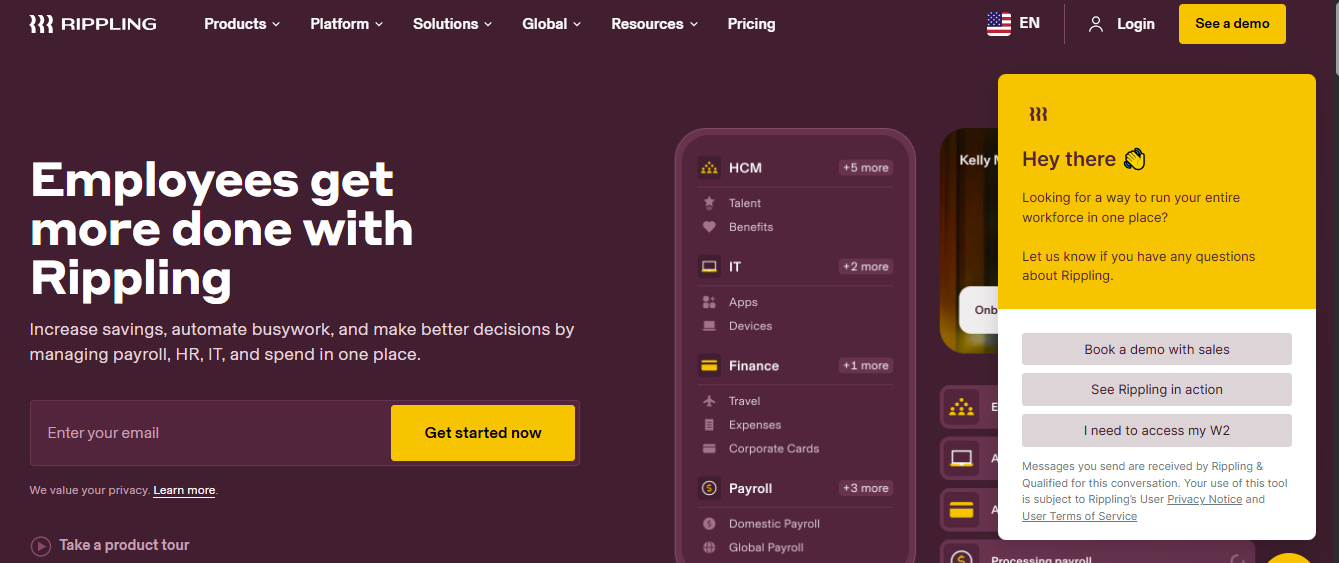

Rippling is revolutionizing modern HR by combining HR, payroll, IT management, and automation into a single unified platform. It allows businesses to manage people, payroll, devices, apps, onboarding, compliance, and permissions—all from one intuitive dashboard. This all-in-one approach reduces manual work, improves efficiency, and streamlines HR operations for growing companies.
Expert Take
HR leaders in fast-growing US companies consistently rate Rippling as the most powerful HR platform because:
- It cuts onboarding time from hours to minutes.
- It automates provisioning of devices and apps.
- It reduces repetitive HR tasks by up to 90%.
- It merges HR and IT seamlessly.
For tech companies, remote teams, and businesses scaling fast, Rippling is usually the first choice.
Key Features
- Automated onboarding in 90 seconds
- Global + US payroll
- Device management (Mac/Windows laptop provisioning)
- Benefits administration
- Applicant Tracking System (ATS)
- Time & attendance
- Learning management
- Custom workflow automation
- AI-powered document creation (contracts, policies)
- Multi-state compliance automation
User Reviews
Users praise:
- Lightning-fast onboarding
- Clean UI
- Extremely powerful automation
- All-in-one integration (no need for 5–10 tools)
Criticism:
- So many modules that beginners may feel overwhelmed
- Pricing increases with additional features
Pricing Overview
Starts at $8 per user per month, but each module has separate pricing.
Pros
- Best automation in the US market
- HR + IT + Finance in one platform
- Extremely fast onboarding
- Powerful global payroll
- Smooth interface
- Great scalability
Cons
- Pricing increases quickly with add-ons
- Requires time to learn all features
Best For
Fast-growing teams, tech companies, remote or hybrid teams, and organizations needing HR + IT automation.
2. BambooHR — Best for Small & Mid-Sized Companies
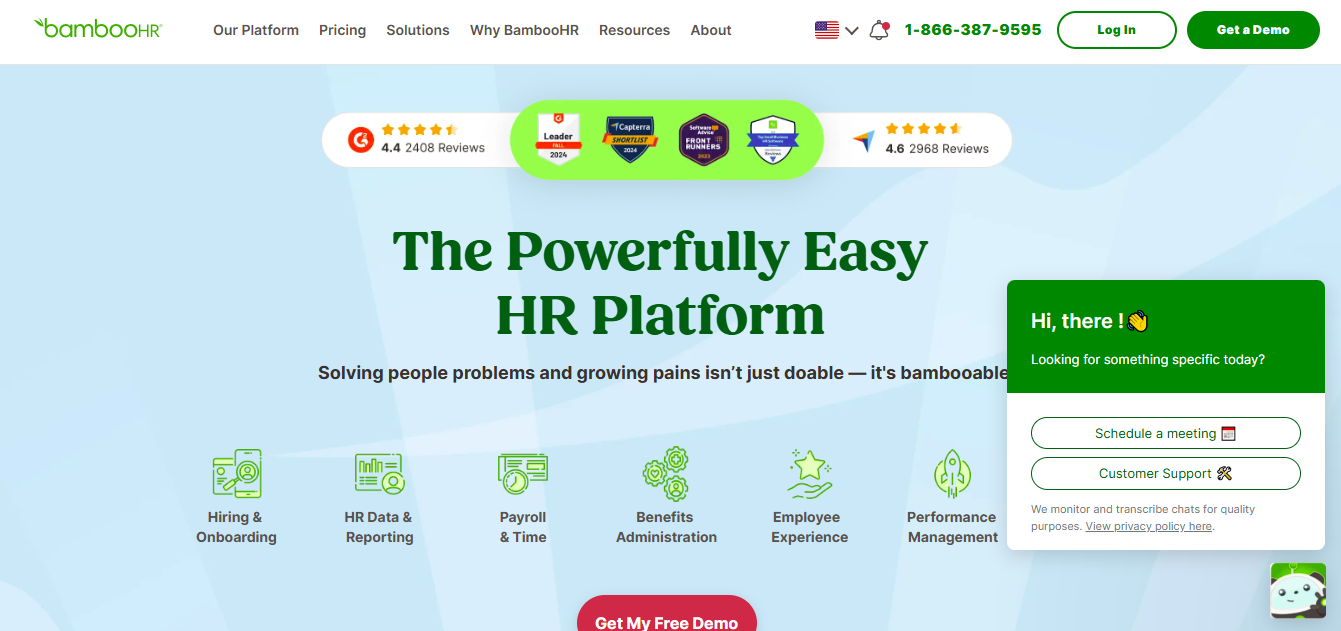

BambooHR continues to be one of the most user-friendly HR platforms available, especially for small and mid-sized companies. Its strength lies in simplicity, offering a clean, intuitive interface for managing employee records, onboarding, time off, and performance. This ease of use reduces HR workload and enhances the overall employee experience.
Expert Take
HR managers love BambooHR for:
- Its intuitive design
- Its employee-focused features
- Excellent onboarding templates
- Easy management of records and time-off
It is the perfect fit for small and mid-sized companies that want to reduce HR stress without learning a complex system.
Key Features
- Employee records
- Hiring & ATS
- Onboarding tools
- Time-off tracking
- Performance management
- Employee surveys
- Reporting
- Self-service portal
User Reviews
Positive:
- Very easy to use
- Employees love the experience
- Time off and self-service are excellent
Negative:
- Payroll is basic
- Automation is lighter than Rippling
Pricing
Custom pricing. Typically $8–$12/user with add-ons.
Pros
- Extremely easy to use
- Great employee experience
- Perfect for small teams
- Clean onboarding workflows
Cons
- Limited payroll functionality
- Not ideal for large teams
Best For
Small and mid-sized US companies that want simple, friendly HR operations.
3. Paylocity — Best for Employee Engagement & Mid-Market HR
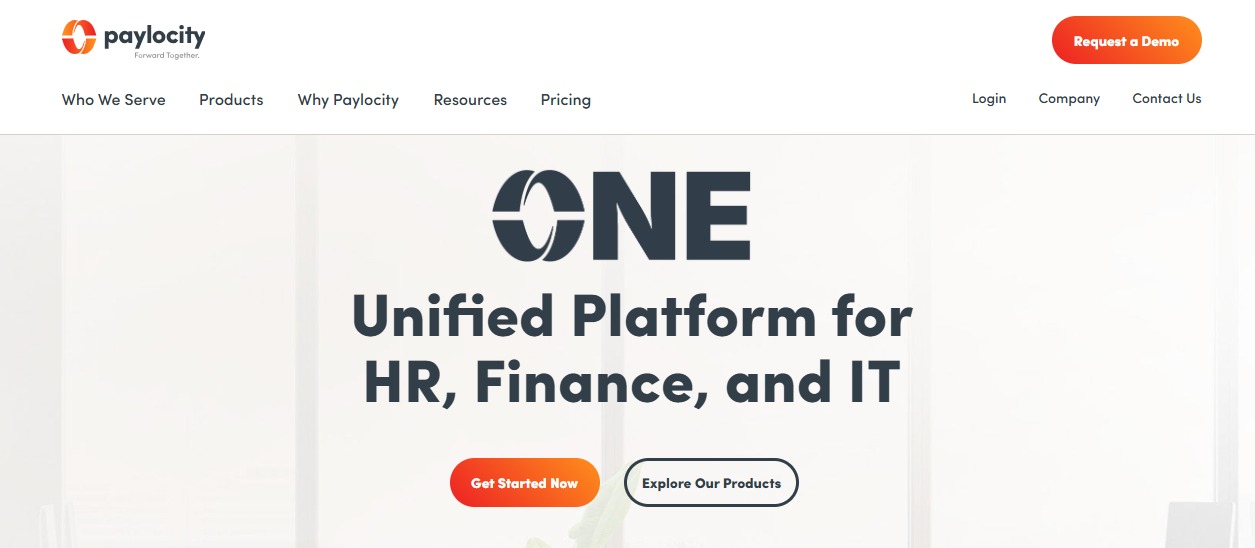

Paylocity is a cloud based HR and payroll platform that brings HR, finance, and IT into one system. Founded in Illinois in 1997 as a domestic payroll service, it has since expanded to support global payroll, human resources, workforce management, talent management, benefits administration, and employee experience solutions.
What makes Paylocity stand out from traditional HR platforms is its strong emphasis on employee engagement. It includes social collaboration tools, recognition features, and a mobile experience designed to keep employees actively using the platform every day.
Expert Take
Paylocity has quietly become one of the strongest mid-market HCM platforms in the US. What sets it apart is its focus on the employee experience, the Community social collaboration feature, Premium Video tools, and modern mobile app feel more like consumer products than enterprise HR software. HR leaders recommend it because:
- It combines payroll, HR, Finance, and IT in one unified platform
- Its employee engagement tools go beyond standard HRIS features
- It handles multi-state payroll reliably and accurately
- It offers strong workforce analytics and customizable reporting
Key Features
- Full-service payroll with automated tax filing
- Human resources management and employee self-service
- Time & labor (time tracking, scheduling, time collection)
- Talent management (recruiting, onboarding, performance, learning management)
- Benefits administration
- Employee Experience tools (Community, Recognition & Rewards, Employee Voice, Premium Video)
- Finance tools (expense management, corporate cards, AP automation, headcount planning)
- IT tools (asset management, access management)
- Workforce analytics and reporting
- AI-powered automation and workflows
- Mobile app
User Reviews
Positive:
- Users praise the responsiveness and knowledge of the support team, the intuitive interface, and the convenience of accessing recruitment, payroll, and workforce management in one place.
- Users highlight the time saved through efficiencies, particularly with performance reviews, payroll, and time/labor in one place, and love the Community page for peer recognition.
Negative:
- Some users report ongoing problems with the mobile app related to clocking in and out, and find report sharing to be time-consuming. A few say phone support is hard to reach with longer-than-expected wait times.
- Some note the cost is on the higher side, and that the expense management platform could be more user-friendly.
Pricing
Like many competitors in the HR space, Paylocity doesn’t publicly post its prices online and instead asks companies to request tailored quotes.
Pros
- Unified HR, Finance, and IT platform
- Standout employee engagement and social collaboration features
- Reliable multi-state payroll and automated tax compliance
- Strong workforce analytics and customizable dashboards
- Modern, intuitive interface with a highly rated mobile app
- Broad integration ecosystem (LinkedIn, Indeed, NetSuite, Tableau, DocuSign, and more)
Cons
- Custom pricing requires a sales conversation — no public rates
- Not ideal for very small businesses or startups seeking low-cost, transparent per-user pricing
- Customer support quality can be inconsistent depending on the assigned rep
- Some advanced reporting features have a learning curve
Best For
US-based companies between 50 and 1,500 employees wanting a modern payroll and HCM platform with strong employee engagement features.
4. Gusto — Best Payroll Software for Small Businesses
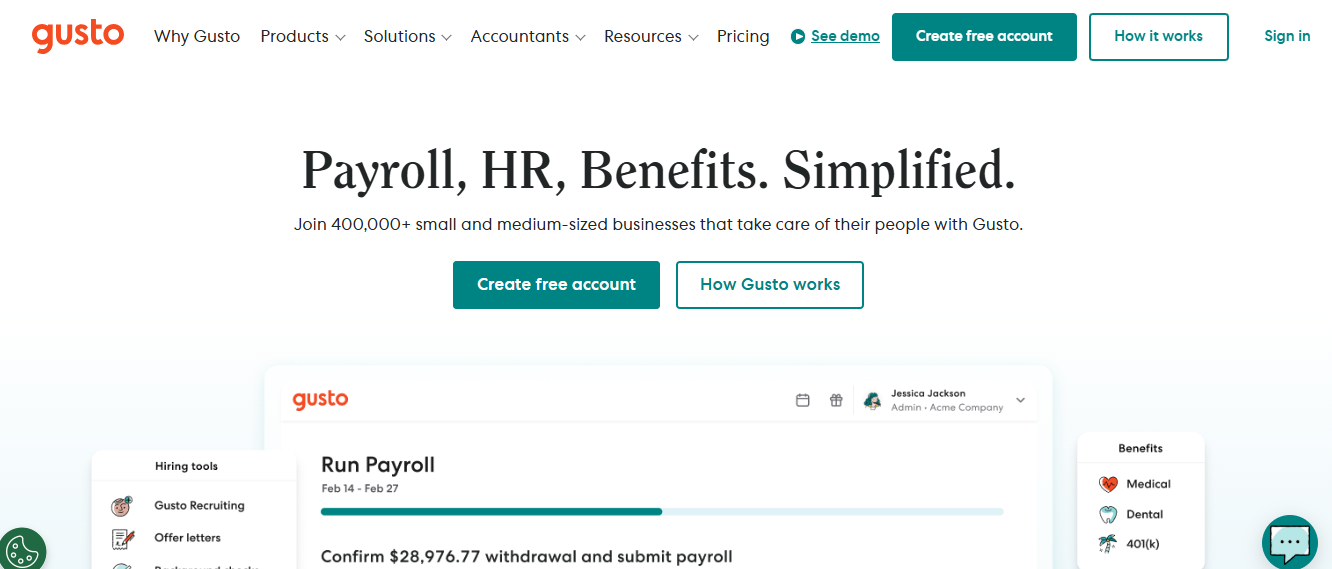

Gusto remains the #1 payroll solution for small US businesses in 2026 because it delivers a rare mix of ease, accuracy, and compliance support. Its automated payroll runs, built-in tax filings, benefits management, and beginner-friendly tools make it the top choice for startups and growing teams that need reliable, hands-off payroll.
Expert Take
Payroll experts recommend Gusto because:
- It handles tax filing automatically
- It minimizes payroll errors
- It supports multi-state compliance
- It simplifies onboarding and benefits
Small teams that rely heavily on payroll choose Gusto because it’s reliable, simple, and transparent.
Key Features
- Full-service payroll
- Federal & state tax filing
- Time tracking
- Hiring tools
- Benefits administration
- 1099 contractor payments
- Automatic W-2 and 1099 creation
User Reviews
Positive:
- Best payroll accuracy
- Modern, easy interface
- Strong compliance
Negative:
- Not ideal for large companies
- HR features are basic
Pricing
$40/month + $6 per employee.
Pros
- The best US payroll solution
- Excellent compliance support
- Transparent pricing
- Good onboarding
Cons
- Not built for complex HR needs
- Not as scalable as Rippling or ADP
Best For
Small US businesses focused heavily on payroll accuracy.
5. Workday HCM — Best Enterprise HR Solution
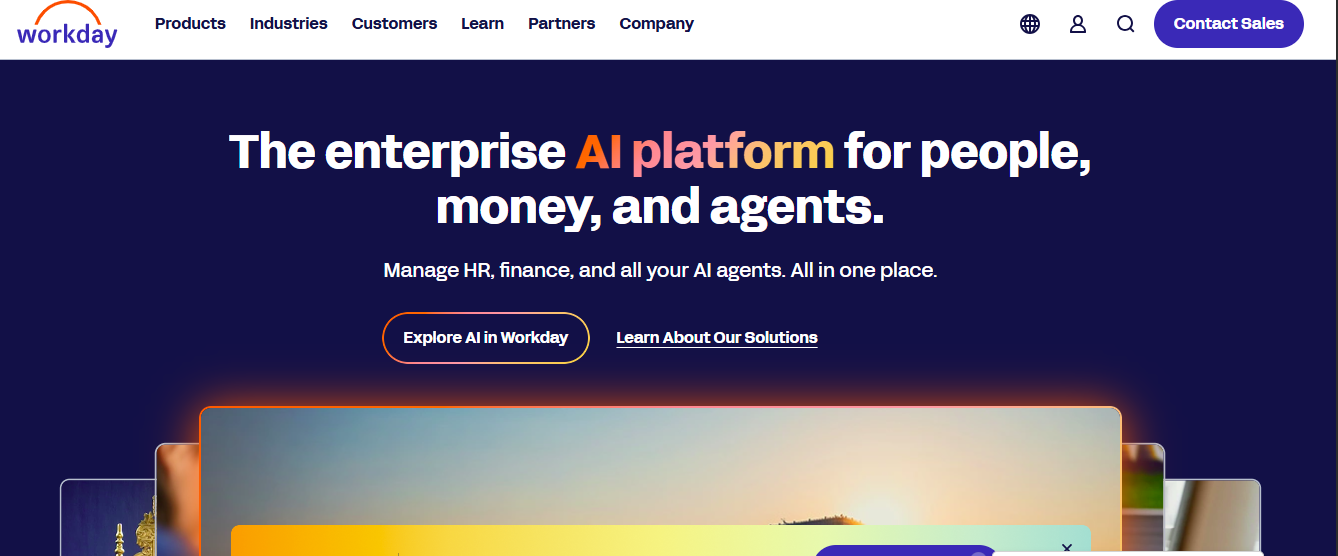

Expert Take:
HR executives recommend Workday because of:
- Enterprise-grade automation for repetitive HR tasks
- Advanced analytics and predictive workforce planning
- Powerful talent management features for recruitment, retention, and succession planning
- Global HR and payroll capabilities for multi-country operations
Key Features:
- Workforce planning and talent forecasting
- Global HR and multi-country payroll
- Recruiting suite and applicant tracking
- Performance management
- Learning management
- Advanced analytics and dashboards
- Payroll (US + global)
- Succession planning
User Reviews:
- Positive: Extremely powerful, scalable for large organizations, excellent analytics and reporting
- Negative: Expensive, complex to implement, requires dedicated training and onboarding
Pricing Overview:
Custom enterprise pricing depending on company size, modules, and global locations. Typical enterprise costs can start from $100+ per employee per month with advanced add-ons.
Pros:
- Deep automation reduces manual HR work
- Predictive analytics for smarter workforce planning
- Scales for large, global enterprises
- Strong talent management and succession planning tools
Cons:
- High cost, not suitable for SMBs
- Complex system requiring training
- Implementation can be time-consuming
Best For:
Large enterprises with complex HR, payroll, and compliance needs.
6. Paycor — Best for Analytics & Recruiting
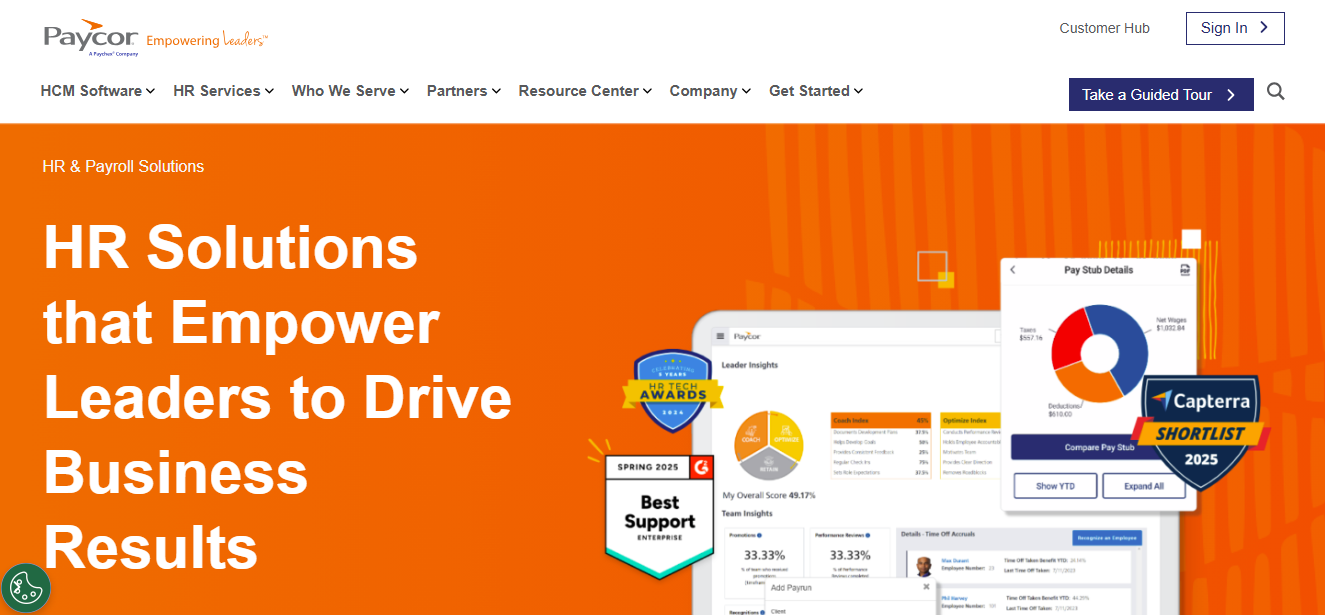

Expert Take:
HR experts recommend Paycor because:
- Detailed workforce analytics enable data-driven decisions
- Strong recruiting and onboarding tools streamline talent acquisition
- Supports mid-sized companies with flexibility and customization
Key Features:
- Payroll and tax management
- Recruiting and applicant tracking system (ATS)
- Onboarding workflows
- Workforce analytics dashboards
- Performance reviews and goal tracking
- Time tracking and learning management
User Reviews:
- Positive: Excellent analytics and reporting, strong recruiting tools, responsive customer support
- Negative: The Mobile app interface could be improved, and the add-on features increase the total costs
Pricing Overview:
Starts at $99/month + $6 per employee per month, depending on modules and feature packages.
Pros:
- Excellent analytics for HR decision-making
- Strong recruiting and onboarding features
- Customizable dashboards and reports
- Good customer support
Cons:
- Mobile app needs improvement
- Add-ons increase overall cost
- Some advanced features are complicated for beginners
Best For:
Mid-sized US companies seeking robust analytics and recruiting capabilities.
7. ADP Workforce Now — Best for Enterprise Payroll Accuracy
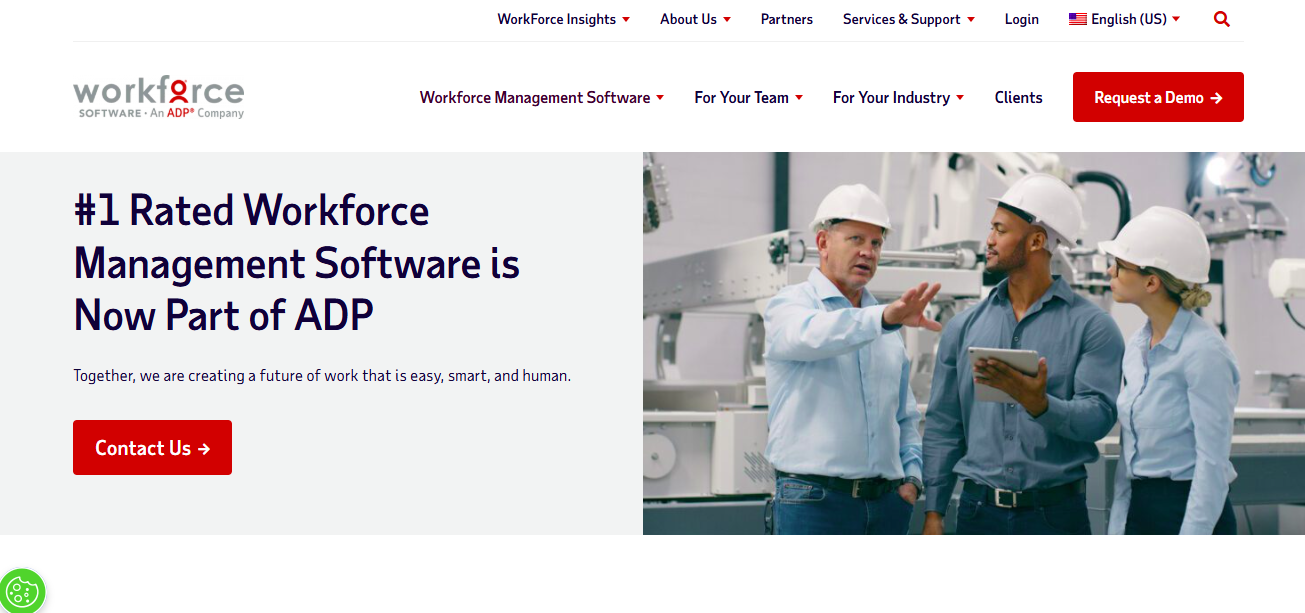

Expert Take:
Payroll professionals choose ADP because:
- Its payroll and compliance accuracy are industry-leading
- Multi-state and global payroll processing is reliable
- Offers access to one of the largest employee benefits networks
- Scales easily across multiple departments and locations
Key Features:
- Payroll processing and automated tax filing
- HR management
- Benefits administration
- Time and attendance tracking
- Recruiting and onboarding tools
- Comprehensive reporting and compliance support
User Reviews:
- Positive: Reliable payroll accuracy, strong compliance features, scalable for large organizations
- Negative: User interface feels outdated, higher cost than SMB-focused HR software
Pricing Overview:
Custom pricing based on company size, features, and modules. Enterprise-level plans typically start from $100–$200 per employee per month.
Pros:
- Highly accurate payroll system
- Strong compliance support
- Scalable for large companies and multiple states
- Established brand with strong reliability
Cons:
- Outdated user interface
- It can be expensive for smaller companies
- May require dedicated HR resources to manage
Best For:
Mid-to-large companies handling complex payroll and compliance needs.
8. Deel — Best for Global Teams & Contractors


Expert Take:
HR consultants recommend Deel because:
- Global compliance is automated, reducing legal risk
- Helps companies hire employees and contractors in 100+ countries
- Provides Employer of Record (EOR) services for legal employment coverage
- Simplifies cross-border payments and benefits administration
Key Features:
- Global payroll for employees and contractors
- Contractor management and EOR services
- Compliance automation for local labor laws
- Equipment and expense management
User Reviews:
- Positive: Easy global hiring, fast onboarding, seamless contractor payouts
- Negative: Not ideal for US-only teams, higher pricing for smaller businesses
Pricing Overview:
Starts at $49 per contractor per month for the basic plan. Enterprise plans with additional services and compliance features can increase in cost.
Pros:
- Best platform for global hiring and payroll
- Automates compliance in multiple countries
- Employer of Record services included
- Fast onboarding and contract management
Cons:
- Higher cost for smaller or US-only businesses
- Limited features for companies with domestic teams only
- Advanced customization requires premium plans
Best For:
Remote-first or global teams, startups expanding internationally, and companies managing contractors worldwide.
9. Namely — Best for Mid-Sized US Companies
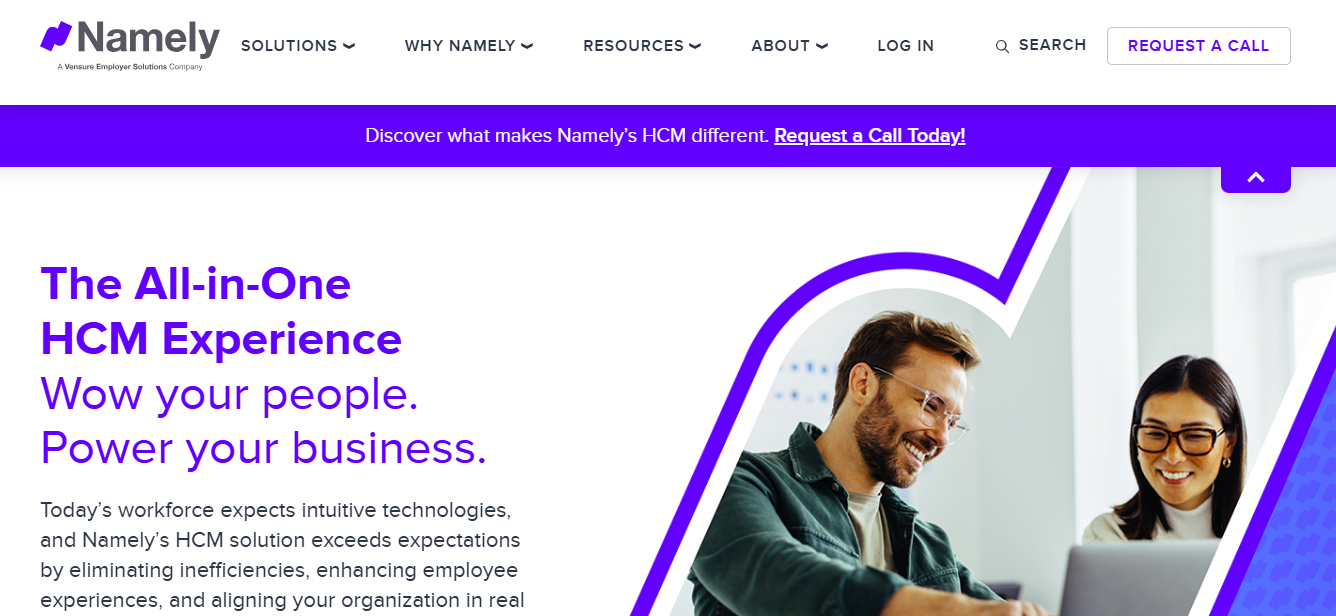

Namely is designed specifically for mid-sized US companies that need a unified HR, payroll, and performance system without enterprise complexity. Known for its personalized workflows, strong employee self-service, and configurable dashboards, Namely strikes a balance between power and simplicity, making it a preferred choice for organizations with 50–1,000 employees seeking streamlined HR operations.
Expert Take:
HR teams like Namely because:
- It feels more “human” and employee-friendly
- It improves engagement
- It combines performance, payroll, and HR in one place
Features:
- HR management and employee records
- Payroll and benefits administration
- Performance reviews and goal tracking
- Customizable dashboards and reporting
- Employee self-service portal
Reviews:
- Positive: Users praise Namely for its intuitive interface and personalized approach.
- Negative: Some note that it lacks advanced AI automation compared to enterprise platforms like Workday.
Pricing Overview:
Custom pricing based on company size and required modules.
Pros:
- Personalized workflows tailored to mid-sized companies
- Strong employee self-service and engagement tools
- Combines HR, payroll, and performance in one platform
- Configurable dashboards and reports
Cons:
- Limited automation compared to larger enterprise tools
- It may not be ideal for very small teams or startups
- Some users want more advanced analytics
Best For:
Mid-sized companies need a personalized HR experience.
10. Zoho People — Best Budget HR Software
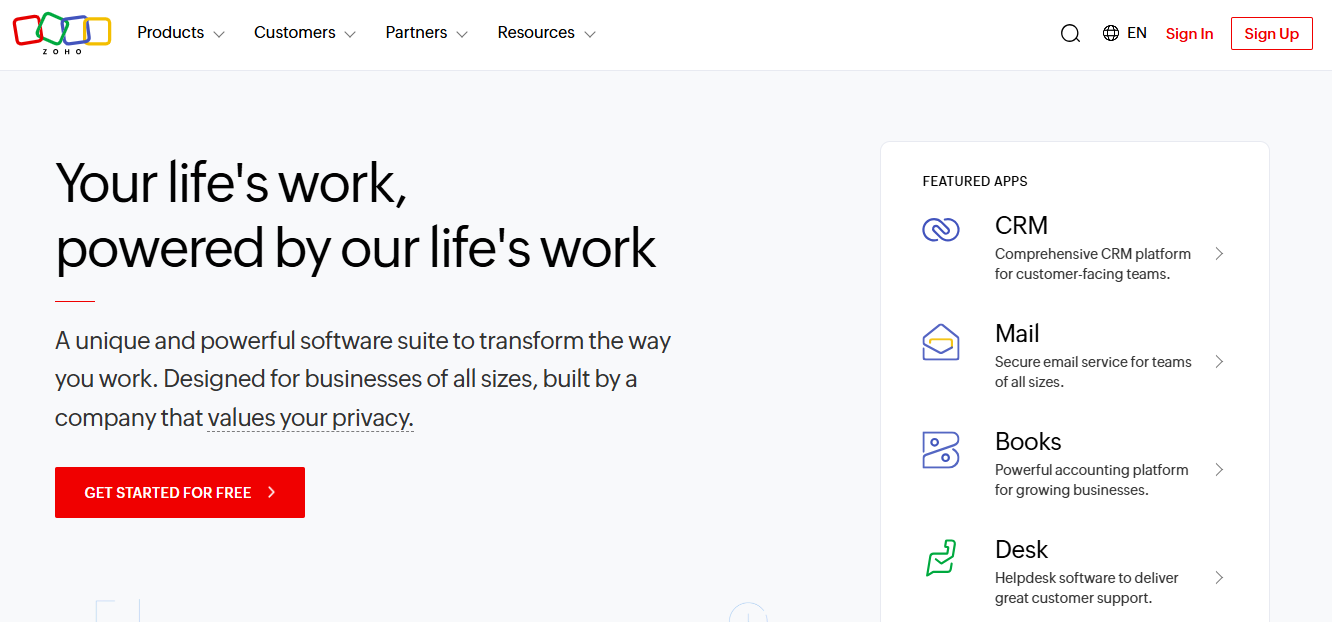

Expert Take:
Founders choose Zoho People because:
- It delivers essential HR features at a very low cost
- It includes solid automation tools
- It integrates with the entire Zoho suite
Features:
- Attendance and leave management
- Employee records and HR database
- Onboarding and offboarding workflows
- Workflow automation
- Basic performance tracking
Reviews:
- Positive: Users appreciate the affordability and simplicity.
- Negative: Some highlight that advanced payroll and global HR features are limited.
Pricing Overview:
Starts at $1.50 per user per month, making it highly cost-effective for small teams.
Pros:
- Very budget-friendly, ideal for startups and small businesses
- Simple and easy to use
- Solid workflow automation for basic HR tasks
- Integrates with Zoho’s full suite of business apps
Cons:
- Limited payroll features
- Not ideal for growing or scaling companies
- Customization options can be confusing for beginners
Best For:
Startups and small teams with tight budgets.
11. Paychex Flex — Most Reliable Payroll for SMBs
Paychex Flex is a robust HR and payroll platform tailored for businesses managing hourly workers, multiple pay rates, and complex shift schedules. With features like time tracking, benefits administration, and automated payroll, it helps companies reduce errors, stay compliant with labor laws, and efficiently handle workforce management across small to mid-sized organizations.
Expert Take:
Payroll experts recommend Paychex because:
- Its payroll accuracy is excellent
- It handles compliance well
- It offers strong HR and benefits options
Features:
- Full-service payroll with tax filing
- Time and attendance tracking
- Benefits administration and HR management
- Hiring and onboarding tools
- Employee self-service
Reviews:
- Positive: Users value its reliability and compliance features.
- Negative: Some mention that the interface feels outdated, and additional upgrades can be costly.
Pricing Overview:
Custom pricing based on features and company size.
Pros:
- Extremely accurate payroll processing
- Strong compliance with US labor laws
- Supports hourly workers and complex shifts
- Offers solid HR and benefits management
Cons:
- The user interface could be more modern
- Additional upgrades increase the overall cost
- It can be more expensive than other SMB-focused HR tools
Best For:
SMBs with hourly workers, retail, and service businesses.
Comparison Table: HR Software In the United States
| Rank | Software | Best For | Starting Price | AI Automation Level | Key Strength |
|---|---|---|---|---|---|
| 1 | Rippling | Fast-growing & tech-driven teams | $8/user/month | Very High | HR + IT + Finance automation (all-in-one) |
| 2 | BambooHR | Small & mid-sized companies | Custom (~$8–$12/user) | Medium | User-friendly HR experience |
| 3 | Paylocity | Mid-market companies (50–1500 employees) | Custom | High | Employee engagement + unified HCM |
| 4 | Gusto | Small businesses (payroll-focused) | $40/mo + $6/user | Medium | Payroll accuracy & compliance |
| 5 | Workday | Large enterprises | Custom (enterprise-level) | Very High | Advanced analytics + enterprise automation |
| 6 | Paycor | Mid-sized companies | $99/mo + $6/user | Medium | Recruiting + workforce analytics |
| 7 | ADP Workforce Now | Mid-to-large organizations | Custom | Medium | Payroll accuracy + compliance |
| 8 | Deel | Global teams & contractors | $49/contractor | Very High | Global hiring + compliance automation |
| 9 | Namely | Mid-sized US companies | Custom | Medium | Personalized HR + employee engagement |
| 10 | Zoho People | Startups & small teams | $1.50/user | Low–Medium | Affordable HR automation |
| 11 | Paychex Flex | SMBs with hourly workforce | Custom | Medium | Reliable payroll + compliance |
Factors to Consider Before Choosing the Above-Mentioned HR Software
Choosing HR software can feel overwhelming because every tool looks similar on the surface—but the differences are massive once you start using them. Below is a simple breakdown of what truly matters.
1. Your Team Size
HR needs to change dramatically depending on team size.
Small Teams (1–50 employees)
These teams typically need:
- Basic HR + payroll
- Simple onboarding
- Employee records
- Time-off management
Best options in 2026: Gusto, BambooHR, Zoho People
Mid-Sized Teams (50–500 employees)
These organizations need:
- Analytics dashboards
- ATS (Applicant Tracking System)
- Benefits administration
- Strong HR workflows
Best options in 2026: Paycor, Namely, Rippling (HR modules)
Large Teams (500+ employees)
Enterprise organizations need:
- Deep analytics
- Global capabilities
- Advanced workflow automation
- Complex payroll across states
- Risk reduction tools
Best options in 2026: Workday, ADP Workforce Now, Rippling (full suite)
2. Your Budget
HR tools can range from extremely affordable to enterprise-level pricing.
Typical costs:
- Low Budget HR Tools: $1.50–$6 per user
- Mid-Range Tools: $8–$15 per user
- Large Enterprise Tools: $20–$30+ per user
Key cost factors to check:
- Base monthly fee
- Per-employee/user fee
- Payroll add-ons
- Benefits add-ons
- ATS or recruiting modules
- IT or device management (Rippling)
- Storage, integrations, and premium analytics
A common issue many companies face is “pricing creep”—starting with a cheap plan, then realizing they must pay for add-ons. Always request a full cost breakdown during demos.
3. Level of Automation You Want
Automation is becoming a central part of HR in 2026.
High Automation Tools
These tools use AI and advanced workflows:
- Predictive analytics
- Intelligent onboarding
- AI-powered document creation
- Smart job-matching
- Risk analysis for turnover
- Automated device provisioning (Rippling)
Best high-automation tools: Rippling, Workday, Deel (compliance + global automation)
Moderate Automation Tools
These tools automate basic tasks:
- Time-off approvals
- Payroll runs
- Notifications
- Onboarding templates
Best medium automation tools: Gusto, BambooHR, Paycor
Low Automation Tools
These tools require more manual setup: Zoho People (affordable but basic automation)
4. Payroll Requirements
For US companies, payroll accuracy is non-negotiable. If your team has hourly workers, multi-state payroll, tipped staff, or contractors, choose strong payroll systems.
Best US Payroll Platforms (2026):
- Gusto – Best overall for small businesses
- ADP Workforce Now – Industry standard for payroll accuracy
- Paychex Flex – Great for hourly workers
- Rippling – Modern payroll with deep automation
5. Compliance Features
Employee regulations in the US are constantly changing—especially in California, New York, Illinois, and Colorado.
Tools strong in compliance include:
- ADP – Gold standard for tax and labor compliance
- Gusto – Best small-business compliance automation
- Rippling – Strong multi-state compliance + automated policy setup
These platforms help with:
- W-2 and 1099 filings
- ACA compliance
- Multi-state payroll taxes
- Worker classification
- Policy templates
- Overtime rule compliance
6. Hiring and Recruiting Needs
If hiring is a major part of your business strategy, your HR tool must include a strong ATS.
Best hiring-focused systems:
- Paycor – Strong recruiting + automation
- BambooHR – Great small-business hiring experience
- Rippling – ATS + onboarding + IT provisioning
- Workday – Enterprise recruiting powerhouse
7. Employee Self-Service (ESS)
A good ESS experience saves HR staff hours every week.
Employees should be able to:
- Request PTO
- Download pay stubs
- Update personal info
- View company policies
- Sign documents
- Complete onboarding
- Enroll in benefits
Tools with excellent ESS: Rippling, BambooHR, Gusto, Namely
8. Scalability
If your company is growing fast, choose software that grows with you.
Most scalable tools:
- Rippling – Add modules anytime, HR + IT + Finance
- Deel – For global hiring expansion
- Workday – Designed for large organizations
Frequently Asked Questions
1. What is the best HR software for small businesses?
Gusto, BambooHR, and Zoho People are the best options for small US companies due to affordability, ease of use, and reliable payroll.
2. What is the best HR software for large enterprises?
Large companies benefit most from Workday and ADP Workforce Now.
3. Which HR software has the best automation?
Rippling and Workday lead in AI-powered automation.
4. What is the best global HR software?
Deel is the simplest and most compliant option for hiring worldwide.
5. What should beginners look for in HR software?
- Easy onboarding
- Payroll accuracy
- Employee self-service
- Time tracking
- HR records
- Compliance tools
6. Is HR software expensive?
Prices vary widely:
- Budget tools: $1.50–$6/user
- Mid-range tools: $8–$15/user
- Enterprise tools: $20–$30+/user
Conclusion
HR software has become essential for modern businesses of every size. Whether you’re running a small startup, managing a growing company, or scaling an enterprise, the right HR platform can save hours of manual work, improve the employee experience, reduce payroll mistakes, ensure compliance, simplify hiring, build a stronger company culture, and support long-term growth.
Each tool in this list is trusted by HR experts for different strengths — Rippling for overall performance, Gusto and BambooHR for small teams, Workday for large enterprises, ADP and Gusto for payroll, Deel for global teams, and Zoho People as a budget-friendly option.
Your HR system will directly shape your employee experience in 2026, so it’s important to choose wisely, understand your business needs, and pick the platform that aligns with your future goals.