



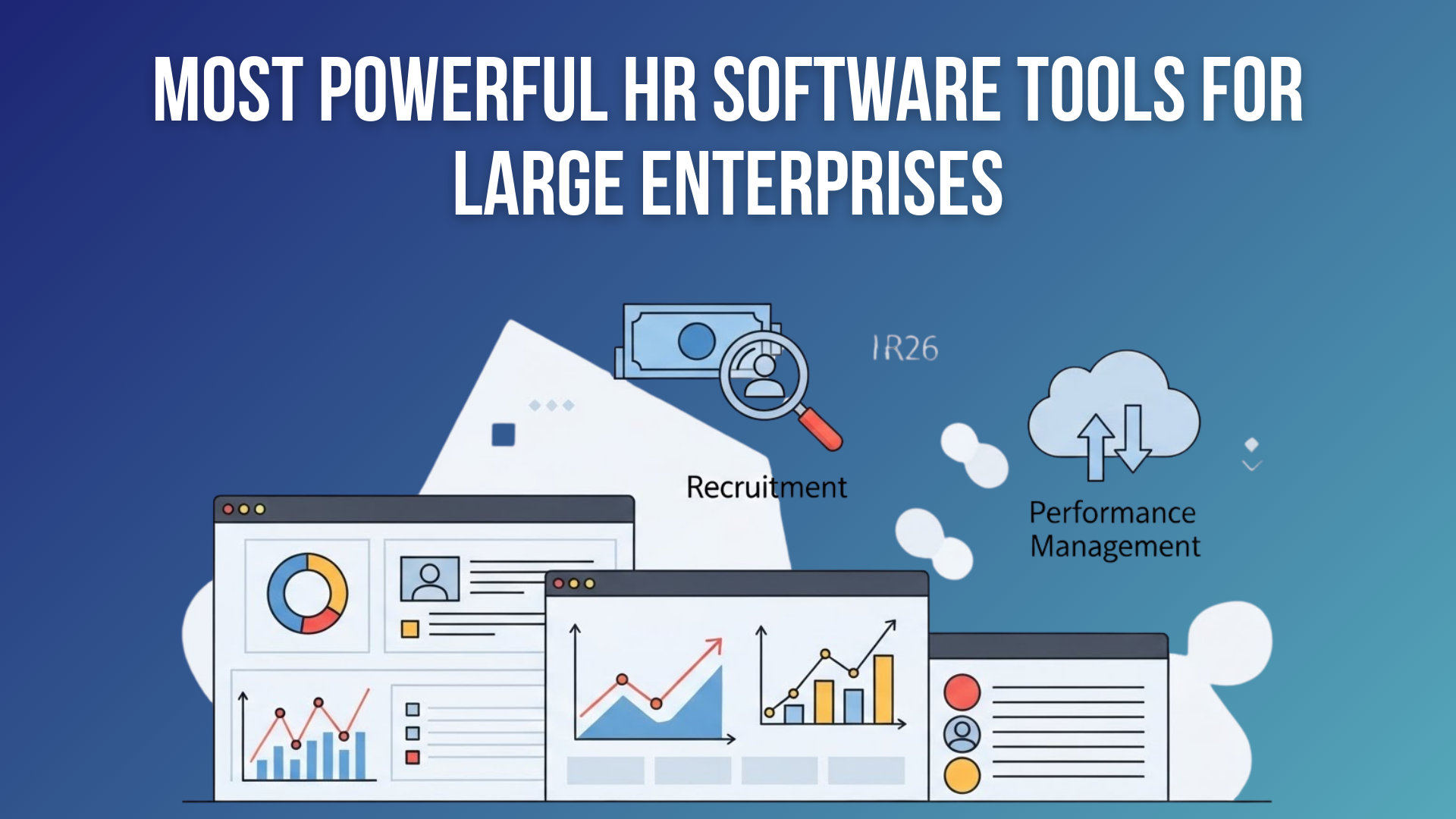
Managing human resources in a large enterprise is one of the hardest jobs in any organization. When a company has hundreds or thousands of employees across multiple departments, cities, or even countries, simple tasks like payroll, recruitment, attendance, compliance, and performance tracking become extremely complex.
This is exactly where enterprise HR software becomes essential.
In 2026, HR software will no longer be just about paying salaries. It now handles:
- Global payroll
- Hiring automation
- Performance tracking
- Legal compliance
- Workforce analytics
- Employee engagement
- AI-driven decision making
According to industry research from global software market analysts, over 85% of large enterprises now use cloud-based HR platforms, and this number is expected to reach almost 95% by 2026 due to automation, compliance pressure, and remote workforce growth.
If you are searching for the most powerful HR software tools for large enterprises in 2026, this guide is built exactly for your needs.
What Is Enterprise HR Software?
Enterprise HR software is a large-scale Human Resource Management System (HRMS or HCM) designed specifically for organizations with 500+ employees.
It includes:
- Core HR
- Payroll
- Recruiting
- Onboarding
- Performance management
- Learning & development
- Benefits administration
- Workforce analytics
- Compliance tracking
Unlike small business HR tools, enterprise platforms are:
- Highly scalable
- Strong in security
- Customizable
- Built for multi-country operations
Why Large Enterprises Need HR Software
Large organizations deal with:
- Thousands of employee records
- Complicated payroll cycles
- Different labor laws
- Union rules
- Global tax systems
- Massive hiring volumes
Without automation:
- Payroll errors rise
- Compliance risks grow
- Employee satisfaction drops
- HR teams get overwhelmed
Enterprise HR software solves this by:
- Automating admin work
- Reducing legal risks
- Improving accuracy
- Giving leadership real-time workforce insights
Factors to Consider Before Choosing Enterprise HR Software
Before investing in powerful HR software, enterprises must evaluate:
- Scalability: Can it grow with your workforce?
- Global Compliance: Does it handle country-specific laws?
- Payroll Accuracy: Does it automate tax & payroll?
- Security Standards: Does it follow GDPR, SOC 2, and ISO?
- Integration: Can it connect with finance, IT, and CRM systems?
- User Experience: Is it easy for employees & HR teams?
- Analytics & Reporting: Does it help leadership plan?
- Vendor Support: Is training & support available?
- Customization: Can workflows match your business?
- Total Cost of Ownership: Not just price, but long-term ROI
10 Most Powerful HR Software for Large Enterprises in 2026
- Workday
- SAP SuccessFactors
- Oracle HCM Cloud
- ADP Workforce Now
- Dayforce
- BambooHR
- Rippling
- Darwinbox
- Paylocity
- Zenefits
Here is the in-depth profile of each HR platform for large enterprises.
1. Workday
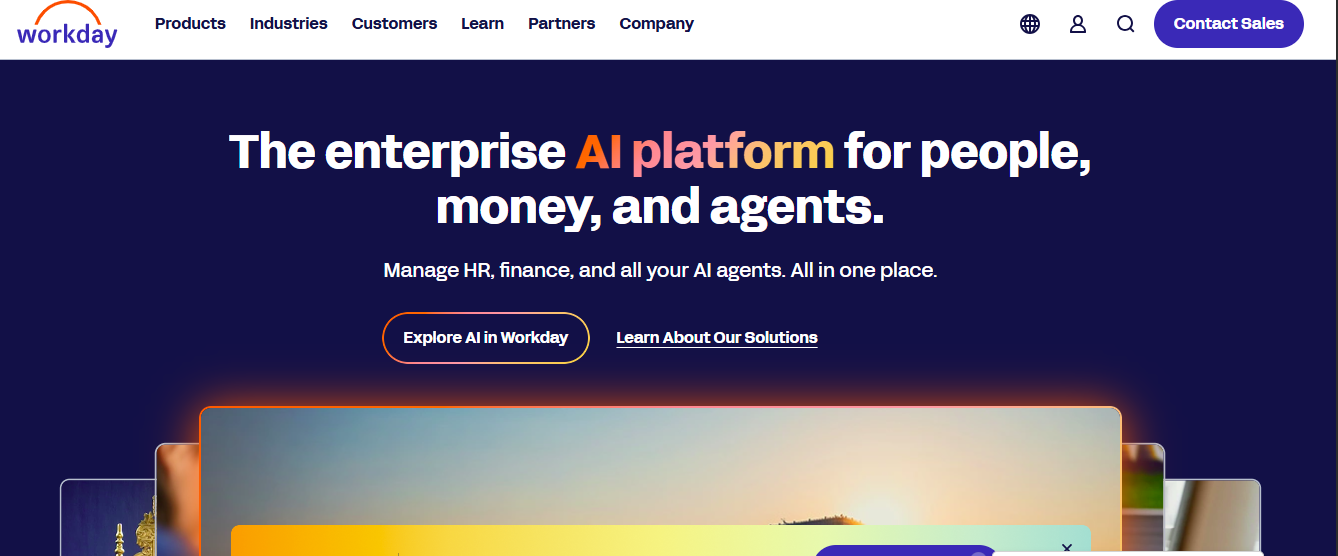

Workday is one of the most widely used enterprise Human Capital Management (HCM) platforms in the world. It offers a fully unified cloud-based system for HR, finance, payroll, talent, and analytics. Large enterprises trust Workday for managing highly complex global workforces.
Features
- Core HR employee records
- Global payroll & compensation
- Talent acquisition & onboarding
- Learning management system (LMS)
- Workforce planning
- Advanced AI analytics
- Time tracking
- Self-service portals
Reviews
Workday consistently receives high ratings for reliability, security, and enterprise scalability. Users praise its unified data system and reporting accuracy.
Pricing Overview
Workday uses custom enterprise pricing based on:
- Employee count
- Modules selected
- Regions covered
Pricing usually starts in the high five-figure annual range for large companies.
Pros
- Extremely scalable
- Strong global payroll
- Excellent analytics
- Enterprise-grade security
Cons
- Complex implementation
- Expensive for mid-size firms
- Requires training
Best For
Large global corporations with 1,000+ employees across many locations.
Workday is the gold standard for enterprise HR software. It is best suited for companies that prioritize data accuracy, global payroll, and long-term workforce strategy.
2. SAP SuccessFactors
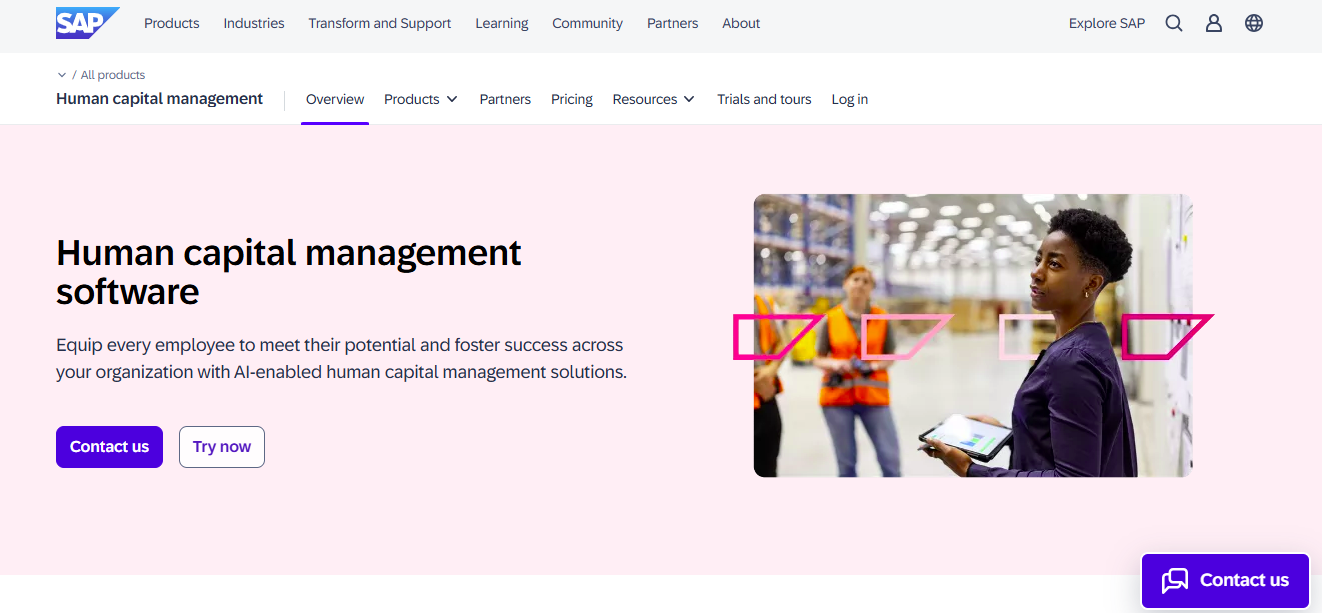

SAP SuccessFactors is an enterprise-grade HR suite designed for companies that need deep control over talent management, learning, and performance at a global scale.
Features
- Core HR management
- Recruiting & ATS
- Learning management
- Performance reviews
- Compensation planning
- Workforce analytics
- Succession planning
Reviews
Global enterprises rely on SuccessFactors for talent development. It is highly rated for learning, performance, and leadership pipelines.
Pricing Overview
SAP offers module-based annual pricing, often starting from $20–$40 per employee per month at enterprise scale.
Pros
- Best-in-class learning tools
- Strong talent planning
- Ideal for multinational firms
Cons
- UI can feel complex
- Pricing increases with modules
- Long setup period
Best For
Enterprises focused on talent development & global HR standardization.
If your enterprise values training, leadership growth, and performance excellence, SAP SuccessFactors is one of the strongest HR systems in the world.
3. Oracle HCM Cloud
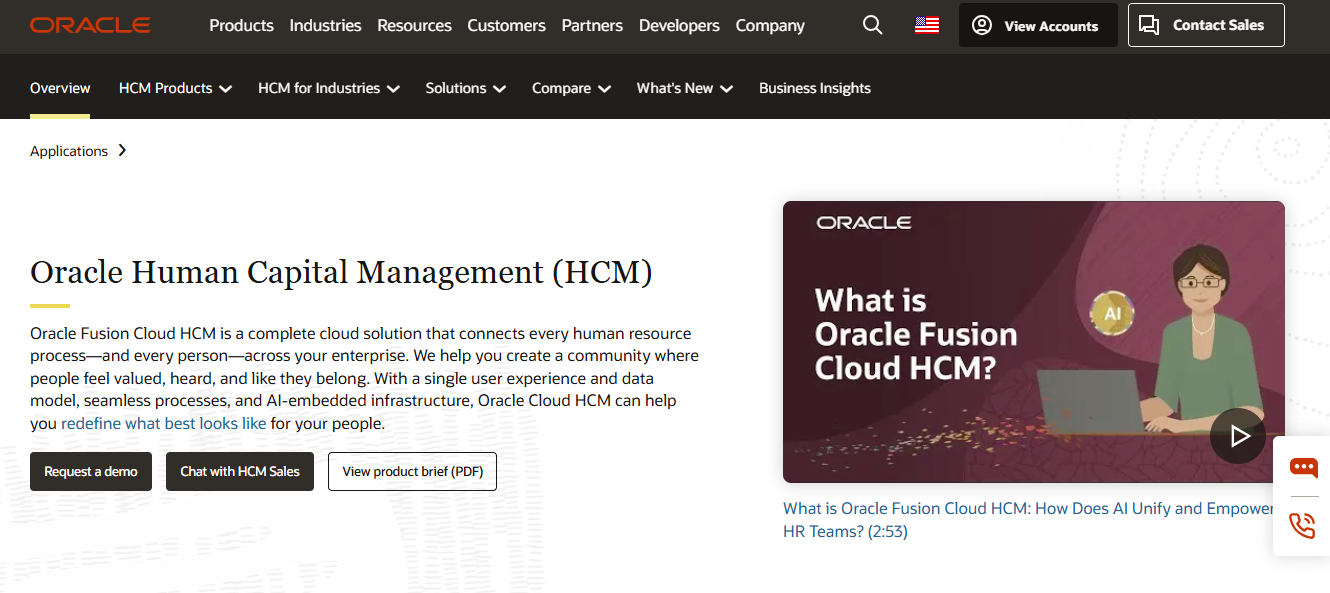

Oracle HCM Cloud delivers a powerful suite for global HR, payroll, compliance, and workforce analytics, built on Oracle’s enterprise-grade cloud ecosystem.
Features
- Core HR & employee data
- Global payroll
- Benefits management
- Talent acquisition
- Learning system
- Workforce analytics
- Time & labor
Reviews
Oracle is praised for its compliance strength, payroll accuracy, and data security.
Pricing Overview
Oracle HCM Cloud pricing is fully customized and typically ranges from $25–$50+ per employee per month for large enterprises.
Pros
- Very strong compliance
- Excellent payroll processing
- Secure data infrastructure
Cons
- Steep learning curve
- High cost
- Complex configuration
Best For
Highly regulated industries like finance, healthcare, and government contractors.
Oracle HCM Cloud is best for enterprises that cannot afford any payroll or legal mistakes.
4. ADP Workforce Now
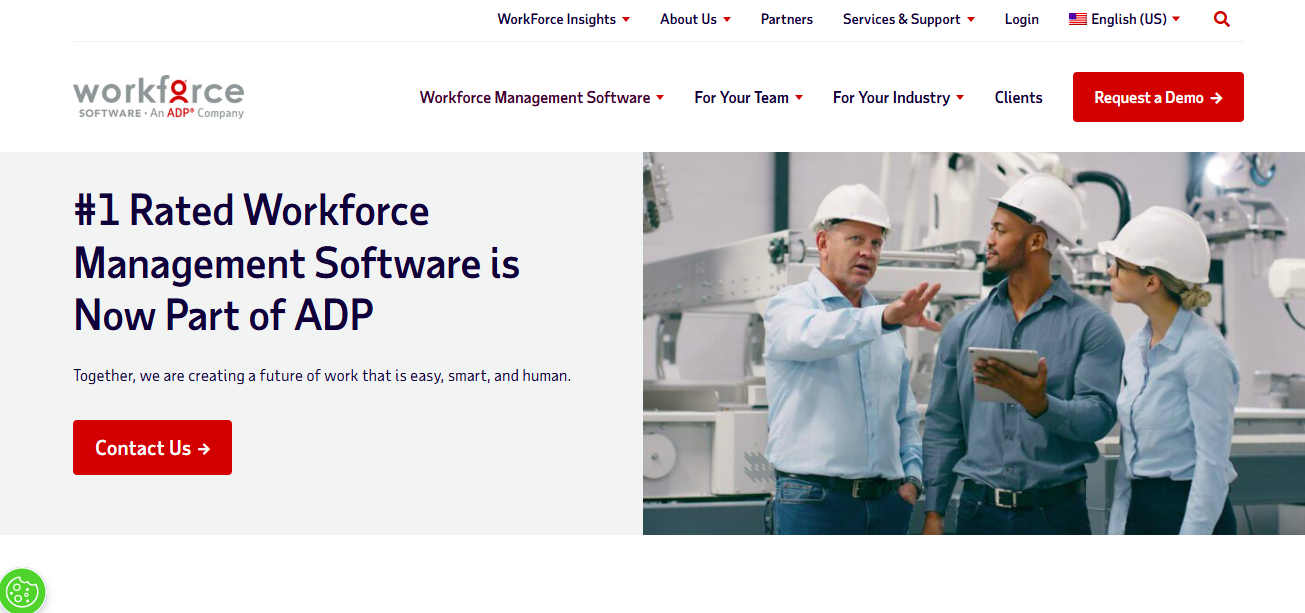

ADP Workforce Now is one of the most trusted enterprise payroll and HR platforms in the world. It is widely known for its tax accuracy and compliance automation.
Features
- Payroll processing
- Tax filing & compliance
- Benefits administration
- Attendance tracking
- Employee self-service
- Reporting dashboards
- Recruitment tools
Reviews
ADP is praised for consistent payroll accuracy and legal safety, especially for US-based enterprises.
Pricing Overview
ADP follows custom enterprise pricing, usually starting from $8–$20 per employee per month based on services.
Pros
- Extremely reliable payroll
- Strong tax compliance
- Mature ecosystem
Cons
- UI feels outdated
- Limited AI automation
- Add-ons increase cost
Best For
Enterprises where payroll accuracy is the #1 priority.
ADP Workforce Now remains a safe and dependable HR solution for large enterprises that want zero payroll risk.
5. Dayforce (Previously Dayforce HCM by Ceridian)

Dayforce is a powerful all-in-one HR, payroll, workforce management, and talent platform built for large enterprises that manage hourly, shift-based, and multi-location workforces. It stands out for its real-time payroll engine, meaning payroll updates instantly as work happens.
Features
- Real-time payroll processing
- Workforce scheduling
- Time & attendance tracking
- Benefits administration
- Talent acquisition
- Performance management
- Labor cost forecasting
- Compliance automation
Reviews
Dayforce is highly rated by enterprises in retail, manufacturing, healthcare, and logistics. Users praise its real-time payroll visibility and labor forecasting accuracy.
Pricing Overview
Pricing is custom and enterprise-based, typically ranging from: $15–$30 per employee per month, depending on modules
Pros
- Real-time payroll accuracy
- Excellent for shift workers
- Strong compliance automation
- Workforce cost forecasting
Cons
- UI can feel heavy
- Reporting setup takes time
- Learning curve for admins
Best For
Large enterprises with hourly workers, rotating shifts, and multi-location operations.
Dayforce is one of the best workforce-focused HR systems in 2026. If your business runs on shifts, it offers unmatched control and payroll speed.
6. BambooHR (Enterprise Edition)
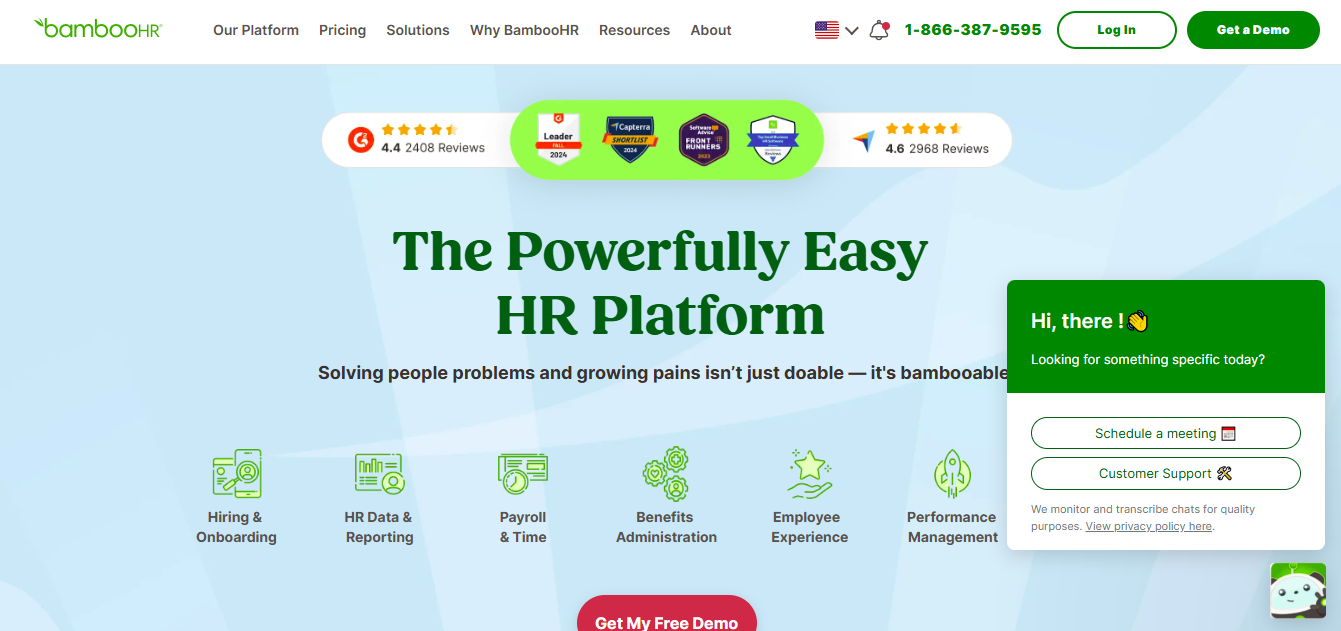

BambooHR started as a small business HR tool but has rapidly evolved into a strong enterprise-ready HR platform for growing large organizations that want simplicity without losing power.
Features
- Core HR employee records
- Applicant tracking system (ATS)
- Onboarding & offboarding
- Time-off management
- Performance reviews
- Employee self-service
- Custom HR reports
Reviews
Users love BambooHR for its clean design and ease of use. It is often rated as one of the easiest HR platforms to adopt.
Pricing Overview
BambooHR offers custom pricing based on features and employee size. Typical cost ranges from: $6–$12 per employee per month at scale
Pros
- Extremely user-friendly
- Fast implementation
- Strong onboarding tools
- Great for HR beginners
Cons
- Limited global payroll
- Fewer advanced analytics
- Not ideal for heavy compliance cases
Best For
Growing enterprises transitioning from manual HR to automation.
BambooHR is perfect for enterprises that want powerful HR management without complexity.
7. Rippling (HR + IT + Payroll in One)
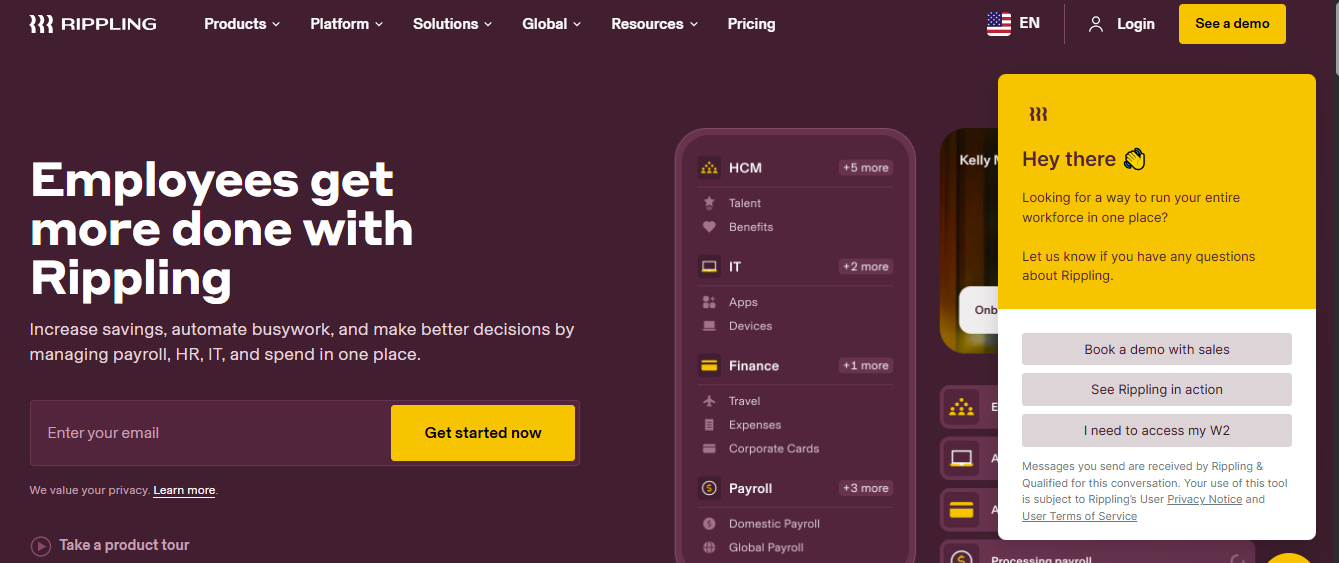

Rippling is a modern unified workforce platform that combines HR, payroll, IT device management, and finance automation into one system — a huge advantage for tech-driven enterprises.
Features
- Global payroll
- Core HR
- Benefits administration
- IT device management
- App access control
- Time tracking
- Expense management
- Compliance tools
Reviews
Rippling is praised for its automation depth and cross-department integration, especially among fast-scaling enterprises.
Pricing Overview
Rippling uses modular pricing:
- Starts around $8 per user per month,
- Increases based on payroll, IT, and finance modules
Pros
- HR + IT + Payroll in one system
- Powerful automation
- Modern UI
- Fast onboarding
Cons
- Final pricing can rise
- Some features are locked behind add-ons
- Still expanding internationally
Best For
Tech-focused enterprises with hybrid HR + IT management needs.
Rippling is one of the most modern enterprise HR platforms of 2026 for companies that want full workforce automation in a single dashboard.
8. Darwinbox
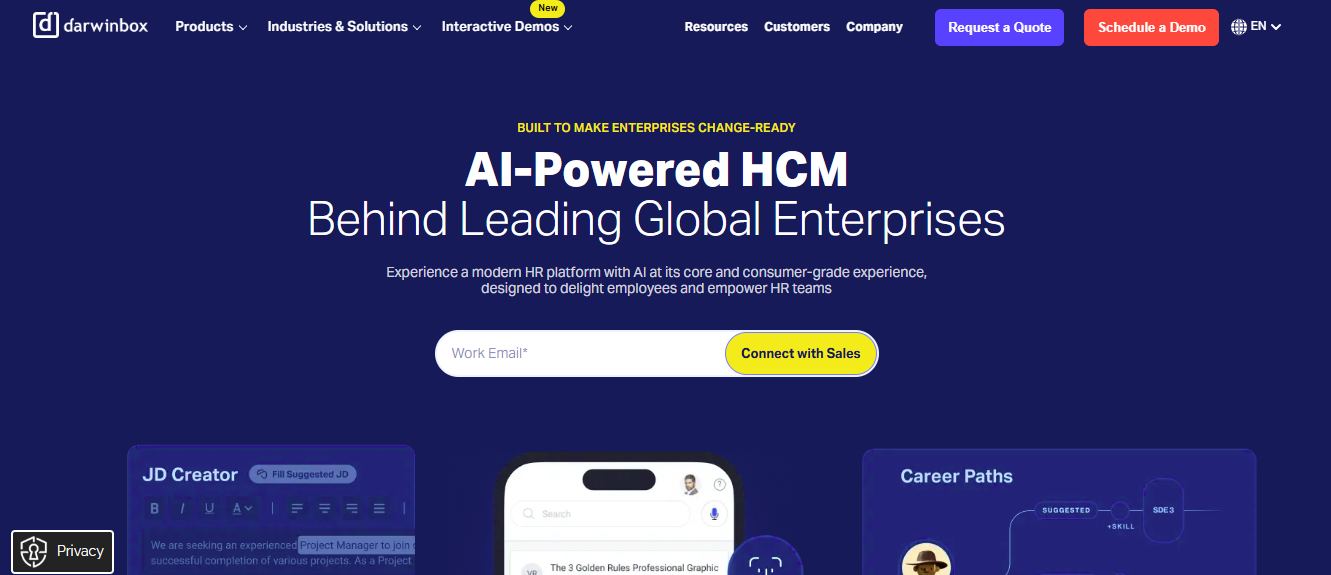

Darwinbox is a rapidly growing AI-powered enterprise HRMS used by large companies across Asia, the Middle East, and global markets. It is known for its mobile-first design and AI-powered HR automation.
Features
- Core HR & payroll
- AI-based recruitment
- Performance management
- Learning management system
- Workforce analytics
- Employee engagement tools
- Mobile HR automation
Reviews
Enterprises praise Darwinbox for its mobile experience, customization flexibility, and employee engagement tools.
Pricing Overview
Darwinbox follows custom enterprise pricing, usually ranging from: $10–$25 per employee per month
Pros
- Mobile-first design
- AI-powered analytics
- Strong performance tools
- High customization
Cons
- Smaller global footprint than SAP/Oracle
- Third-party integrations are limited in some regions
Best For
Enterprises that want modern, mobile-first HR technology.
Darwinbox is one of the fastest-rising enterprise HR platforms of 2026, especially for digital-first organizations.
9. Paylocity
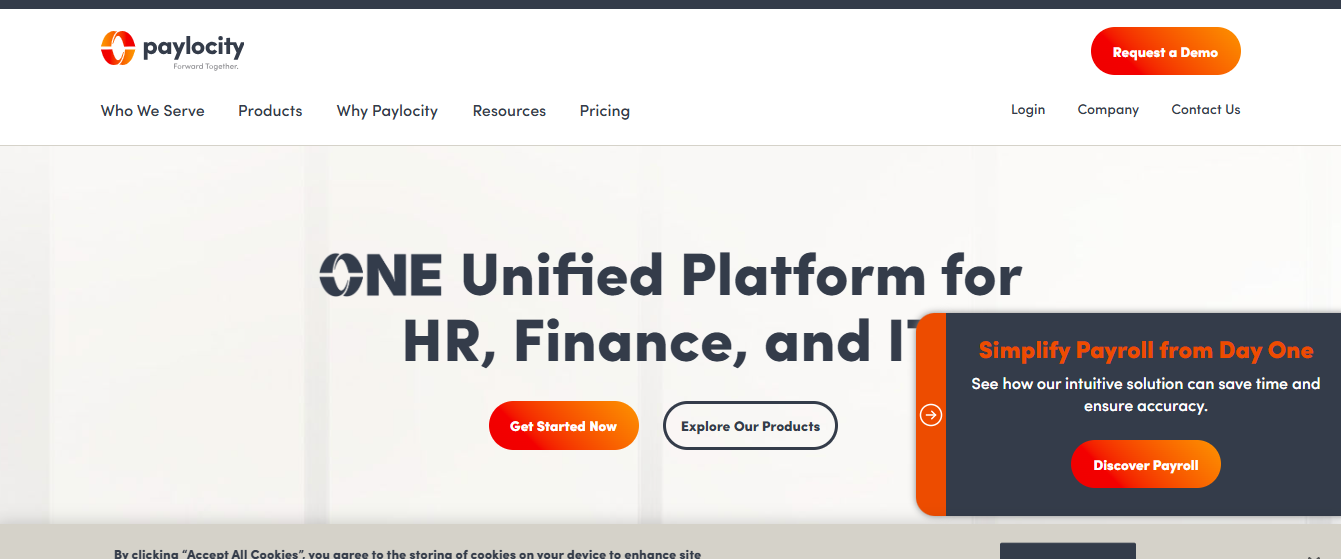

Paylocity is a robust cloud-based HR and payroll platform well-known for its employee engagement and social collaboration tools for large organizations.
Features
- Payroll & tax automation
- Core HR
- Benefits management
- Performance management
- Peer recognition tools
- Social collaboration
- Learning portals
Reviews
Paylocity receives strong reviews for employee engagement and payroll stability.
Pricing Overview
Paylocity uses enterprise-based custom pricing, typically: $10–$25 per employee per month
Pros
- Great engagement tools
- Reliable payroll
- Strong self-service features
- Good for distributed teams
Cons
- Analytics is less advanced than Workday
- The interface can feel busy
Best For
Enterprises that care deeply about employee engagement and culture.
Paylocity is an excellent HR tool for enterprises that want to improve employee participation and workplace communication.
10. Zenefits (Now TriNet Zenefits)

Zenefits is a simplified HR, payroll, and benefits platform that helps large organizations automate employee benefits, compliance, and onboarding without heavy manual work.
Features
- Payroll automation
- Benefits administration
- Compliance tracking
- Time-off management
- HR document storage
- Employee self-service
Reviews
Zenefits is praised for benefits automation and compliance tracking, especially for US-based enterprises.
Pricing Overview
Zenefits plans usually start from: $10–$27 per employee per month, depending on bundle
Pros
- Strong benefits management
- Easy compliance setup
- Clean UI
- Quick deployment
Cons
- Limited global payroll
- Less advanced analytics
- Not ideal for huge global corporations
Best For
US-based enterprises with heavy benefits administration needs.
Zenefits is best for enterprises that prioritize benefits automation and legal compliance without complicated systems.
Which HR Software Is Best for What in 2026?
Each tool on this list is considered top-tier and industry-leading in its own category. Here is a quick breakdown to help decision-makers instantly identify the best platform based on their exact business needs:
- Workday → Ultimate Enterprise HCM Leader:
Best for large global organizations that need end-to-end HR, finance, payroll, and workforce analytics in one powerful system. - SAP SuccessFactors → Best for Talent & Learning Management:
Ideal for enterprises that focus heavily on employee growth, leadership development, and structured performance systems. - Oracle HCM Cloud → Best for Compliance & Global Payroll:
Perfect for highly regulated industries that require strict legal compliance, audit control, and payroll accuracy. - ADP Workforce Now → Payroll Reliability King:
Best for enterprises where payroll accuracy, tax filing, and regulatory compliance are the top priorities. - Dayforce → Best for Shift-Based & Frontline Workers:
The strongest choice for businesses with hourly employees, rotating shifts, and real-time payroll needs. - BambooHR → Best for Easy & User-Friendly Enterprise HR:
Ideal for growing enterprises that want powerful HR tools without technical complexity. - Rippling → Best for HR + IT + Finance Automation:
A perfect solution for tech-driven enterprises that want to manage employees, devices, apps, and payroll in one place. - Darwinbox → Best AI-Driven Mobile HR Platform:
Excellent for digital-first enterprises that prefer AI-powered workflows and mobile-first employee experiences. - Paylocity → Best for Employee Engagement & Culture:
Best for enterprises that prioritize communication, collaboration, and employee participation. - Zenefits (TriNet Zenefits) → Best for Benefits & Compliance Automation:
Ideal for US-based enterprises that want benefits administration, onboarding, and labor law compliance in one system.
Comparison Table — Top HR Software for Enterprises in 2026
| Platform | Best Strength | Global Payroll | AI Features | Scalability | Best For |
| Workday | End-to-end HCM | ✅ Yes | ✅ Yes | ✅ Very High | Global corporations |
| SAP SuccessFactors | Talent + Learning | ✅ Yes | ✅ Yes | ✅ Very High | Multinational HR |
| Oracle HCM Cloud | Payroll + Compliance | ✅ Yes | ✅ Yes | ✅ Very High | Complex enterprises |
| ADP Workforce Now | Payroll Accuracy | ✅ Yes | ✅ Limited | ✅ High | Payroll-heavy businesses |
| Dayforce | Real-time payroll | ✅ Yes | ✅ Yes | ✅ High | Shift-based workforce |
| BambooHR | Ease of use | ❌ Limited | ❌ Basic | ✅ Medium | Growing enterprises |
| Rippling | HR + IT + Finance | ✅ Yes | ✅ Yes | ✅ High | Hybrid teams |
| Darwinbox | Mobile HR | ✅ Yes | ✅ Yes | ✅ High | Global modern HR |
| Paylocity | Engagement tools | ❌ Limited | ❌ Moderate | ✅ High | Distributed teams |
| Zenefits | Benefits automation | ❌ Limited | ❌ Basic | ✅ Medium | Mid-large enterprises |
Frequently Asked Questions (FAQs)
1. What is the best HR software for large enterprises in 2026?
Workday, SAP SuccessFactors, and Oracle HCM Cloud are considered the top enterprise HR solutions globally due to scalability, compliance, and analytics power.
2. How much does enterprise HR software cost?
Pricing usually ranges from $10 to $50 per employee per month, depending on features, payroll needs, and global coverage.
3. Which HR software is best for global payroll?
Workday, Oracle HCM, Dayforce, and Rippling provide strong multi-country payroll automation.
4. Is AI used in modern HR software?
Yes. Many 2026 enterprise HR platforms now use AI for hiring, workforce forecasting, and performance evaluation.
5. Which HR software is best for employee engagement?
Paylocity, Darwinbox, and BambooHR are leaders in engagement and performance feedback systems.
6. Can HR software help reduce compliance risks?
Yes. Tools like Oracle, ADP, and Zenefits automate tax filing, labor law updates, and policy tracking.
7. Which HR platform is easiest to use?
BambooHR and Zenefits are known for beginner-friendly user interfaces.
8. Do large enterprises still need HR teams if they use HR software?
Yes. Software supports HR teams, but decision-making, culture-building, and leadership still require people.
9. Is cloud-based HR software secure for large companies?
Yes. Most enterprise platforms follow SOC 2, ISO 27001, GDPR, and enterprise-grade encryption standards.
10. Can these tools integrate with finance and accounting systems?
Yes. Most top enterprise HR systems integrate with ERP, accounting, IT, and CRM platforms.
Conclusion
In 2026, enterprise HR software is no longer optional—it has become a core business necessity for large organizations. As companies expand across countries, manage remote and distributed teams, follow strict global payroll and labor laws, and compete for top talent, manual systems simply cannot keep up.
Choosing the right HR platform now depends heavily on factors such as your total workforce size, the countries you operate in, your available budget, compliance requirements, and long-term growth plans. When selected wisely, enterprise HR software does much more than just manage employees—it boosts productivity, protects the business from legal risks, strengthens company culture, and supports sustainable long-term growth.