

Imagine spending money on ad campaigns but not knowing who’s really taking a slice of your budget—or worse, paying more than needed because ads pass through too many middlemen. Many advertisers struggle with hidden fees, duplicated bids, and unclear supply chains. It’s confusing, wasteful, and frustrating. You want your ad dollars going straight to quality inventory—not being eaten away by unnecessary intermediaries.
That’s where Supply Path Optimization (SPO) comes in. It’s a method to clean up the advertising supply chain, cutting out waste, reducing unfair fees, and making your campaigns more efficient and transparent.
In this article, we’ll explain SPO in simple terms, why it’s so important in 2025, how it works, who benefits (advertisers & publishers), and how to implement it. So without further ado, let’s start!
What Is Supply Path Optimization (SPO)?
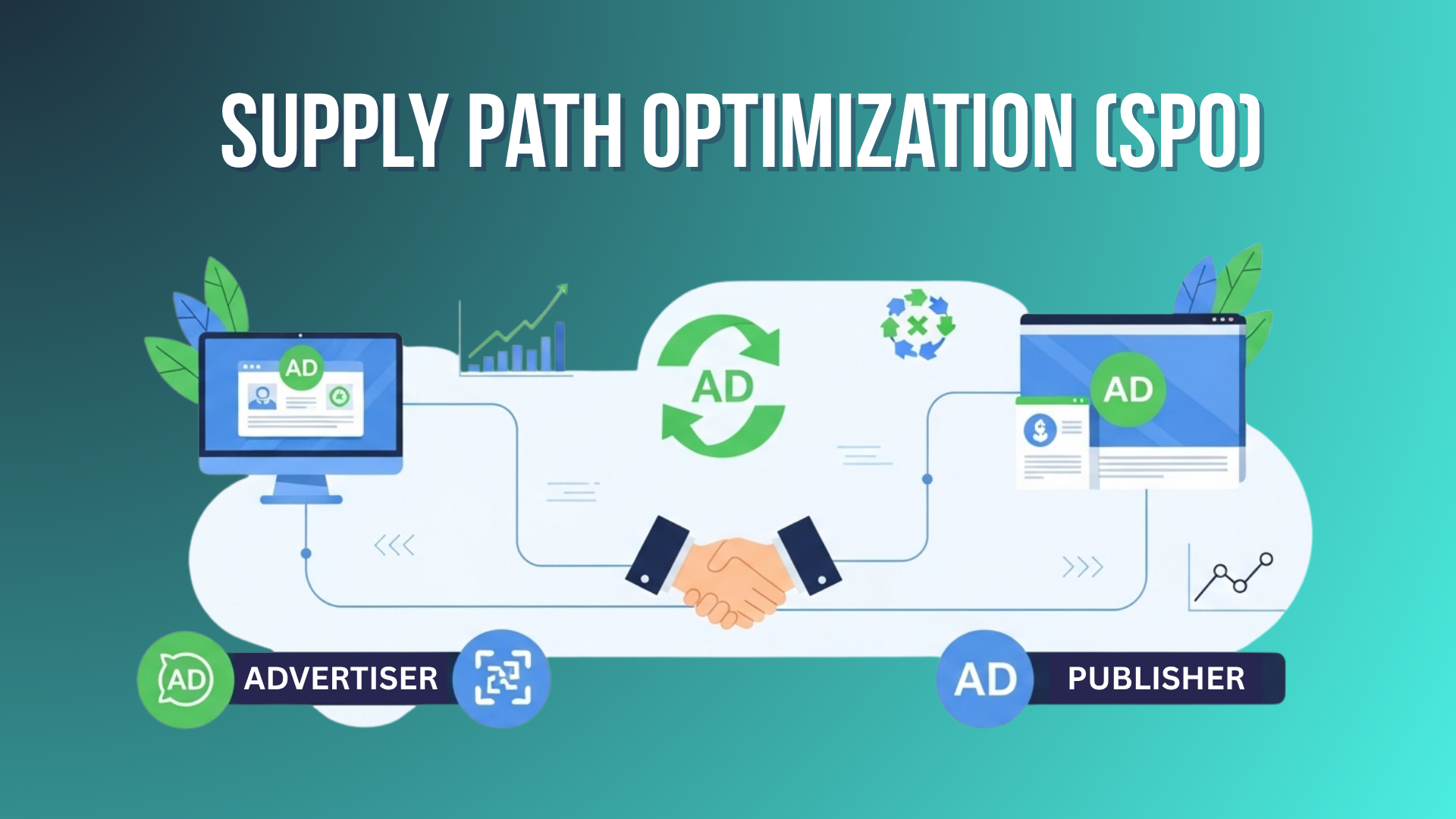
Supply Path Optimization (SPO) is the practice of selecting the most efficient, direct, and cost-effective route for advertisers to buy ad inventory in the programmatic ecosystem. Instead of going through many middlemen (SSPs, exchanges, resellers), SPO aims to use the paths that give you the most value with minimum waste.
You can think of it like a courier choosing the fastest, cheapest, and safest route to deliver a package. In advertising, advertisers use SPO to pick which supply partners to use, which to avoid, and which offer the strongest results.
Key Terms You Should Know
- DSP (Demand-Side Platform): A system advertisers use to buy ad inventory in real-time auctions.
- SSP (Supply-Side Platform): A platform publishers use to offer their inventory to multiple buyers.
- Ad exchange / reseller / intermediary: Entities between DSPs and SSPs that may buy, resell, or pass along inventory.
- Auction duplication: When multiple SSPs send the same impression to DSPs, causing DSPs to bid against themselves.
- Direct vs Reseller path: A direct path is when an SSP deals directly with a publisher; a reseller may be an extra layer in between.
Why SPO Became Essential (and How We Got Here)
Before SPO, programmatic ads often followed a “waterfall” model—publishers would send inventory to one SSP at a time, in sequence. Then, header bidding emerged (around 2014), allowing publishers to get bids from many SSPs in parallel. This increased competition and revenue, but also added complexity.
The problem: DSPs began receiving dozens of bids for the same impression through different paths. That leads to auction duplication (bidding against yourself) and confusion over which path is real, efficient, or costly.
This chaos birthed SPO. DSPs and advertisers realized not every path adds value; some are redundant, expensive, or even fraudulent. They needed a way to weed those out and focus only on quality supply.
The Goals Behind SPO
At its heart, SPO is about fixing common pain points in programmatic ads—like wasted budget, hidden fees, and low-quality placements. The goals are simple and focused on giving advertisers more control and better results.
- Reduce waste & hidden fees — fewer unnecessary intermediaries
- Improve transparency — know exactly where your money is going
- Avoid fraud & bad inventory — reject shady paths
- Boost performance — faster delivery, higher viewability, better ROI
- Better relationships — working directly with trusted partners instead of many unknown middlemen.
In the end, SPO is about spending smarter. Cutting waste, boosting transparency, and working with trusted partners, it helps advertisers get more value from every dollar.
How SPO Actually Works (Step by Step)
Supply Path Optimization (SPO) can feel like a complex buzzword, but in reality, it works in a very logical way. Imagine you’re trying to deliver a package. There are many possible routes: some are direct highways, while others take you through back roads, tolls, and even unnecessary detours. SPO is about choosing the fastest, most reliable, and most cost-effective route for your ads to reach the publisher. Here’s how it works behind the scenes:
1. Map Supply Paths
The first step is to identify all the possible “routes” your ads can take. This includes Supply-Side Platforms (SSPs), ad exchanges, and sometimes resellers.
Why it matters: According to the IAB Tech Lab, many impressions can pass through 3–5 intermediaries before reaching the publisher. Without mapping, you may not even realize how complex and costly your supply chain is.
2. Gather Performance Data
Once paths are mapped, advertisers collect data on each one: cost per impression (CPM), win rates, latency (how fast bids are processed), and viewability (whether users actually see the ads).
Why it matters: A study by PwC found that nearly 15% of ad spend in programmatic goes unaccounted for. Gathering data highlights where money is wasted and which paths actually perform well.
3. Score & rank paths
Each supply path is then scored based on transparency, fees, reliability, and traffic quality. Paths that have clear reporting, fair pricing, and high-quality placements rank higher.
Why it matters: By ranking, advertisers know which partners deserve more of their budget and which ones are just adding “tech tax” without results.
4. Prune Low-value Paths
After scoring, underperforming SSPs or resellers are removed or deprioritized. This means fewer intermediaries are involved in the process.
Why it matters: Removing weak links can reduce hidden fees and fraud. For example, Google’s 2020 report showed that eliminating resellers cut invalid traffic by almost 11%.
5. Continuously Monitor & Adapt
SPO doesn’t stop after one clean-up. Advertisers must regularly monitor data since partners, auction types, and technologies keep changing.
Why it matters: Digital advertising is dynamic. Continuous optimization ensures ad dollars stay efficient and campaigns remain transparent.
In simple terms, SPO is like constantly checking Google Maps to avoid traffic, tolls, and roadblocks. Some Demand-Side Platforms (DSPs) even automate this process using algorithms that track hidden fees, auction types (first-price vs. second-price), and partner reliability in real time. The result? Lower costs, cleaner supply chains, and ads that reach the right audience faster and more effectively.
Benefits of SPO — Who Gains and How:
For Advertisers & Marketers
- Lower costs & better ROI: Less money wasted on unnecessary intermediaries means more ad spend reaches quality inventory.
- Greater transparency & control: You see exactly who handles your ads and at what cost.
- Better ad performance: With cleaner paths, ads load faster (lower latency), are more viewable, and have fewer errors.
- Reduced fraud risk: By cutting paths with suspicious behavior, you avoid fraudulent inventories.
- Stronger brand safety: You avoid shady or low-quality sites by selecting trusted paths.
- Sustainability benefits: Some advertisers even reduce their carbon footprint by eliminating inefficient hops.
For Publishers & SSPs (the Supply Side)
- Higher yield/ad revenue: When advertisers pick their paths, they favor publishers with clean, efficient inventory.
- Better demand concentration: Fewer but stronger demand partners mean predictable, higher-quality bids.
- Cleaner ecosystem / less competition with resellers: Getting rid of redundant resellers helps publishers keep more of the ad spend.
- More trust & partnerships: Transparent supply chains build stronger relationships with advertisers.
- Market improvement: Over time, the whole ad ecosystem becomes healthier as low-quality paths fade.
According to IAB’s studies, a large share of ad spend can vanish in hidden costs. For example, only about 51% of the money spent typically reaches the publisher, with the rest eaten by intermediaries and inefficiencies.
Also, many brands, agencies, and DSPs (around 87%) are actively using SPO to improve efficiency and transparency.
Common Challenges & Pitfalls (So You Don’t Trip)
- Data complexity & overload: With many SSPs and intermediaries, raw logs can be massive and messy to interpret.
- Resistance from intermediaries: Middlemen may push back if their revenue is at risk.
- Technical integration: Some SSPs or platforms may not support your optimizations easily.
- Constant evolution: The ad tech ecosystem changes — paths that worked yesterday may not work tomorrow.
- Balancing scale vs. efficiency: Sometimes you need a broader reach, which means some compromise.
- Incomplete transparency: Some resellers or SSPs may hide data or markups, making true evaluation hard.
How to Start Implementing SPO?
Supply Path Optimization (SPO) may sound complex, but it’s just a smart clean-up process for programmatic ads. The goal: cut waste, avoid hidden fees, and make sure your ads show up in the right places. Here’s a step-by-step plan that even beginners can follow.
1) Audit Your Current Supply Paths – See the Whole Picture
What to do: Ask your DSP for a report of all routes your ads travel: SSPs (Supply-Side Platforms), exchanges, resellers, and domains. Put this data into a simple spreadsheet.
Key data to collect:
- Impressions per path
- CPM (cost per thousand impressions)
- Win rate (how often bids win)
- Latency (how fast bids are answered)
- Viewability % (ads actually seen)
- Fraud or invalid traffic flags
Why it matters: You can’t fix what you can’t see. Some SSPs add hidden fees or sell the same impression multiple times. An audit shows where money is wasted.
Quick example: If Path A costs more but converts less than Path B, you’ll know Path A is draining your budget.
2) Rank Partners – Turn Data Into a Score
What to do: Create a scoring sheet. Rate each SSP or reseller (1–5) on:
- Performance (ROI, conversions)
- Cost (CPM, fees)
- Transparency (clear reporting)
- Latency (speed)
- Fraud risk
Tip: Weight the scores (e.g., performance 30%, cost 25%) to make results fair.
Why it matters: Instead of guessing, you’ll have a clear list of who’s worth keeping and who to cut.
3) Use Allow / Block Lists – Control Your Routes
What to do:
- Build an allowlist of SSPs and domains you trust.
- Block the worst performers from your audit.
- Remove partners slowly so you don’t lose reach.
Why it matters: This puts you in charge. Your ads won’t run through shady or duplicate resellers, saving money and improving results.
4) Negotiate With Top SSPs – Get Better Deals
What to do: Talk to your best partners. Show them your data and ask for:
- Lower or clearer fees
- Private marketplace (PMP) access
- Faster response times
- Stronger fraud protection
Why it matters: Direct relationships cut middlemen and hidden markups. SSPs are often open to deals if you spend consistently.
5) Use Transparency Tools – ads.txt, sellers.json, SupplyChain Object
What they are:
- ads.txt → Publishers list who can sell their inventory.
- sellers.json → Shows details about SSPs and resellers.
- SupplyChain Object → Reveals the full path of an impression.
What to do: Ask publishers to keep ads.txt and sellers.json updated, and make sure your DSP reads SupplyChain data.
Why it matters: These tools expose resellers and prevent domain spoofing — helping you buy from trusted sources only.
6) Monitor Regularly – Keep an Eye on Trends
What to do: Create a simple report and track key numbers weekly or monthly:
- CPM and CPA by SSP
- Viewability rate
- Latency
- Invalid traffic spikes
Why it matters: Programmatic markets change fast. A partner that’s good today can show fraud tomorrow. Regular checks save money.
Pro tip: If fraud or latency rises 20% above your baseline, pause that path and check why.
7) Test Carefully – Don’t Change Everything at Once
What to do: Run A/B tests:
- Control group = current setup
- Test group = optimized paths (top partners only)
- Run both for 2–4 weeks and compare CPA, conversions, ROI.
Why it matters: Testing shows if your changes actually improve performance. It also avoids sudden drops in reach.
8) Try Programmatic Curation – Advanced Step
Buying from curated, pre-selected pools of trusted publishers (often through PMPs).
How to start:
- Pick 3–5 reliable publishers or SSPs
- Set up private deals
- Use audience/contextual targeting
Why it matters: Curation reduces waste. The inventory may cost a little more, but conversions and ROI usually improve because the supply path is cleaner.
SPO isn’t about cutting everything at once — it’s about seeing clearly, scoring fairly, and adjusting slowly. Start with an audit, keep testing, and use tools like ads.txt and sellers.json to stay transparent. Over time, your programmatic ads will get cheaper, cleaner, and more effective.
SPO vs DPO — What’s the Difference?
- SPO (Supply Path Optimization) focuses on which supply paths (SSPs, exchanges, resellers) to use or avoid, from the advertiser side.
- DPO (Demand Path Optimization) is the flip side: publishers decide which demand paths (DSPs, agencies) they prefer.
Together, SPO + DPO help both sides move toward greater transparency, cleaner supply chains, and better matching of demand and supply.
Frequently Asked Questions (FAQs):
Q1. How often should I review my supply paths?
At least quarterly, and more often (monthly) if your campaigns or markets change quickly.
Q2. Does SPO work only for big advertisers?
No, even small advertisers can benefit. Optimizing your paths ensures every ad dollar stretches further.
Q3. Will cutting intermediaries hurt reach?
Possibly if you go too aggressively. That’s why you test gradually, cut low-value paths first, and keep enough scale.
Q4. How does SPO reduce ad fraud?
By filtering out supply paths with shady or suspicious behavior and working only with transparent, trusted partners.
Q5. Are tools needed to do SPO?
Yes — you’ll need analytics tools, logs, transparency standards (ads.txt, sellers.json, SupplyChain Object), and ideally an SPO-enabled DSP.
Q6. Can publishers enforce SPO?
Yes. Publishers can choose which supply partners they allow, how they configure resellers, and encourage DPO on the demand side.
Q7. Does SPO lower quality or revenue?
When done poorly, yes. But when done well, it focuses the budget on high-quality inventory and increases yield. You must monitor and be cautious.
Conclusion:
You don’t have to accept hidden fees, unclear supply chains, or wasted ad spend. SPO gives you the power to clean your routes, cut unnecessary costs, and put your budget where it truly matters.
In a world where every rupee (or dollar) counts, advertisers who adopt SPO will see better performance, more transparency, and stronger control. Publishers who deliver clean, high-quality inventory will win preference from smart buyers. Over time, the entire programmatic ecosystem becomes healthier and more efficient.
Your next move: audit your supply paths, rank partners, prune the weakest links, negotiate with key SSPs, and continuously watch what works. Do this with patience and care — every small improvement compounds. In 2025’s competitive programmatic world, SPO isn’t optional — it’s essential.