

In today’s crowded online marketplace, brands face a tough reality: consumers are bombarded with ads everywhere, from social media to search engines. Many shoppers skip traditional display ads or ignore irrelevant promotions. This means your marketing dollars can easily get wasted.
Here’s the good news: Retail Media Networks (RMNs) solve this problem. RMNs allow brands to advertise where shoppers are already shopping—on retailer websites, apps, or even in-store digital screens. Instead of guessing where your audience is, RMNs use first-party data to target people actively in the buying mindset.
For brands struggling to maximize ROI, RMNs are a powerful solution. They improve ad relevance, increase conversions, and allow precise measurement of campaign performance.
In this guide, you’ll learn what retail media networks are, how they work, and the benefits they offer to brands, retailers, and consumers. You’ll also discover the top RMNs, key trends for 2026, and the challenges brands may face, along with strategies to overcome them. This comprehensive overview will help you understand why RMNs are essential for modern marketing.
What Is a Retail Media Network?
At its core, a Retail Media Network is an advertising platform owned by a retailer. It allows brands to advertise directly to shoppers using retailers’ first-party data—information collected straight from their customers’ behavior on websites, apps, and in-store systems.
Think of RMNs as the digital equivalent of the “end-cap” or shelf placement in a physical store, but much smarter. The difference? These ads are personalized, measurable, and can target the right shopper at the exact right time.
- Retailer-Owned Platforms: These are the digital spaces that a retailer controls, such as their website, mobile app, or even digital screens inside their stores. Brands can place their ads here to reach shoppers who are already interacting with the retailer’s platform, making the ads more relevant and timely.
- First-Party Data: This is the information that retailers collect directly from their shoppers. It includes things like what products someone has bought, which pages they’ve browsed, how they interact with loyalty programs, and basic demographic info like age or location. This data allows brands to show personalized ads to the right people at the right time.
- Ad Inventory: Think of this as the “ad space” a retailer has available for brands to advertise. It can be on websites, mobile apps, emails, or in-store screens. Brands can purchase these slots to display their products and promotions to shoppers where they are most likely to see them and make a purchase.
With these components, brands can reach the right shoppers without wasting ad spend on audiences unlikely to convert.
How Do Retail Media Networks Work?
RMNs operate in a data-driven, closed-loop advertising model. Here’s how it works step by step:
- Data Collection: Retailers gather first-party data on shoppers through transactions, app usage, email engagement, and loyalty programs.
- Audience Segmentation: Brands identify target segments based on behaviors such as frequent buyers, seasonal shoppers, or cart abandoners.
- Ad Placement: Ads are displayed on retailer websites, mobile apps, in-store screens, or even across external platforms like social media and CTV.
- Performance Measurement: Using first-party data, brands can track conversions, clicks, and ROI directly tied to specific ad placements.
The closed-loop measurement is a major advantage. Traditional digital ads often rely on third-party cookies or estimated attributions, which are becoming less reliable due to privacy regulations. RMNs connect advertising to actual sales.
Main Types of Retail Media Ad Placements
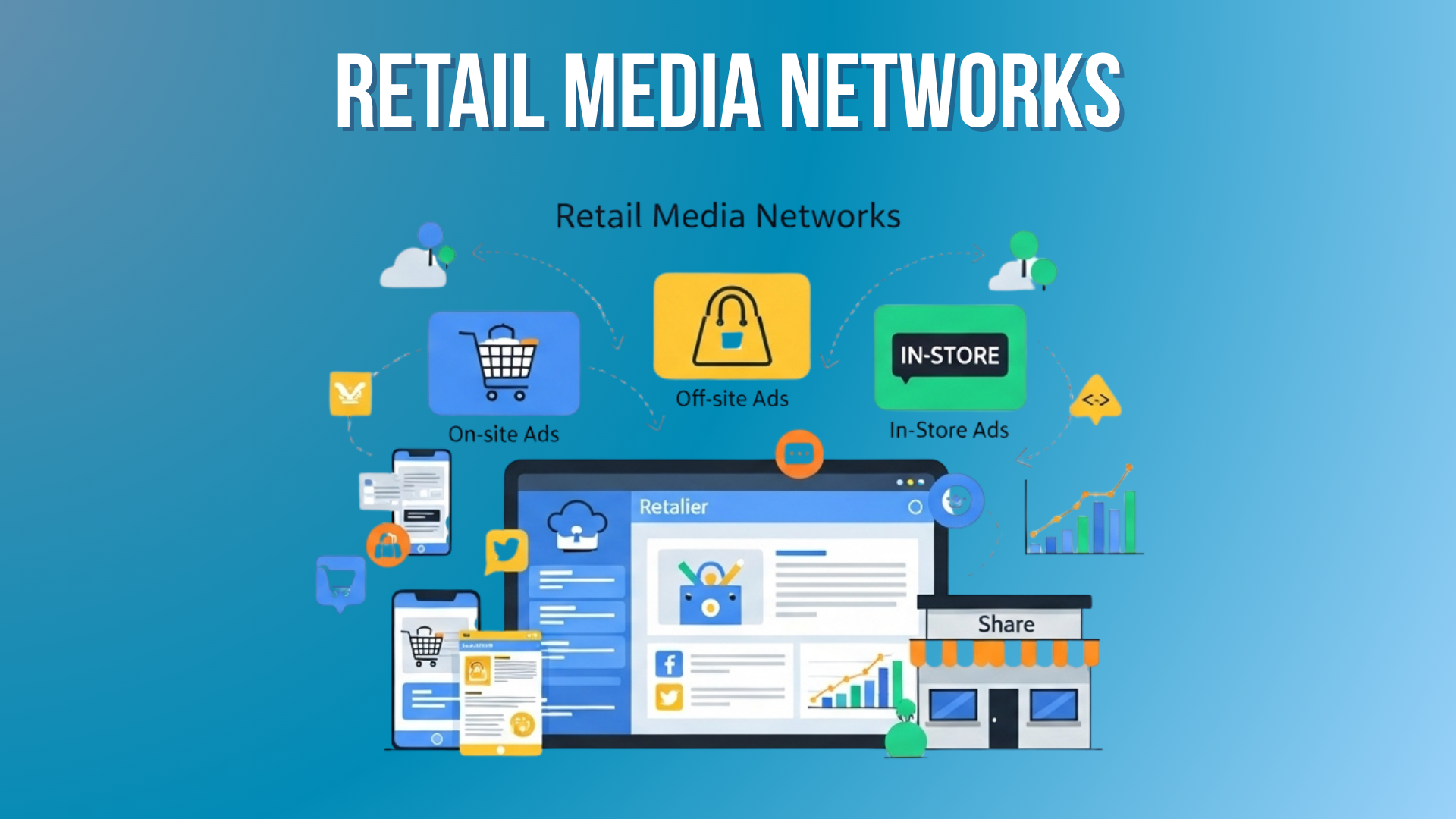
Retail media ads come in three main types: on-site, off-site, and in-store. Each type targets shoppers in a different way, helping brands reach their audience whether they’re browsing online, scrolling social media, watching connected TV, or shopping in a physical store. Using a mix of all three types creates a seamless experience, ensuring your ads appear wherever your customers are most likely to notice them.
1. On-Site Ads
On-site ads appear directly on the retailer’s own digital platforms, such as their website or mobile app. These ads target shoppers while they are already browsing or shopping, making them highly relevant and effective.
- Homepage Ads: These are the first ads shoppers see when they visit the retailer’s website or app. Because they appear immediately, they are great for catching attention quickly and introducing shoppers to new products, deals, or promotions. Think of it like walking into a store and seeing a big display right at the entrance—it’s impossible to miss.
- Category Page Ads: These ads appear on pages that list specific product categories, like electronics, skincare, or sports equipment. They target shoppers who are already interested in a particular type of product, so the ads feel more relevant and increase the chances of a purchase.
- Search Ads: These ads show up when a shopper searches for a product or keyword on the retailer’s website. For example, if someone searches for “wireless headphones,” an ad for your headphone brand can appear at the top. This targets shoppers actively looking to buy, making it highly effective for conversions.
- Product Detail Page (PDP) Ads: These appear on a specific product’s page and can suggest complementary items or alternatives. For instance, on a page for a laptop, an ad might suggest a laptop bag or mouse. This is similar to an in-store recommendation by a sales assistant.
2. Off-Site Ads
Off-site ads appear outside of the retailer’s platforms, but still use retailer data to reach the right audience. They help brands expand reach to shoppers who may not be on the retailer’s site yet but are likely to be interested.
- Display Banners on Other Websites: These are the traditional banner ads you see on websites. Retailers can use their shopper data to show these ads to people who are likely interested in the products, even when they are browsing other sites.
- Social Media Ads Using Retailer Data: Brands can target shoppers on social media platforms like Facebook, Instagram, or TikTok, using data from the retailer. This ensures that ads are shown to users who have already shown interest in similar products, increasing relevance and engagement.
- Connected TV (CTV) Ads: These are video ads shown on streaming services like Hulu, Roku, or smart TVs. Retailers can use their first-party data to target households that are likely to be in-market for certain products, combining the reach of TV with precise targeting.
3. In-Store Ads
In-store ads bring digital targeting into physical retail locations, connecting online and offline shopping experiences.
- Digital Signage: These are screens placed around the store that show ads, promotions, or product suggestions. They capture shoppers’ attention while they shop, similar to posters in a mall but dynamically updated.
- Point-of-Sale Promotions: Ads and offers displayed near checkout counters encourage last-minute purchases or upsells. For example, a candy or accessory ad near the register can lead to an impulse purchase.
- QR-Code-Based Campaigns: Shoppers can scan codes placed around the store to unlock personalized offers, learn more about a product, or get discounts. This bridges the offline and online experience, letting retailers track engagement and provide tailored promotions.
Tip: Combining on-site, off-site, and in-store placements creates an omnichannel strategy, meaning your brand reaches consumers wherever they are, whether shopping online or in person. This makes your campaigns more effective, seamless, and customer-friendly.
Retail Media vs. Traditional Advertising
Traditional ads often rely on assumptions or third-party data. Retail media networks are different because:
- They use first-party data, making targeting far more precise.
- They reach consumers at the point of purchase, increasing the likelihood of conversion.
- They provide closed-loop reporting, so brands can directly link ad spend to sales.
Why Every Brand Should Care About RMNs
1. Better Targeting Using First-Party Data
Instead of showing ads to everyone, brands can target actual buyers. For example, a shopper who regularly buys skincare products can see personalized ads for a new moisturizer.
2. Higher ROI and Sales Conversions
Since shoppers are in the buying mindset, ad engagement is higher. McKinsey reports that return on ad spend (ROAS) from RMNs can be 3–5x higher than traditional digital campaigns for consumer packaged goods (CPG).
3. Enhanced Shopper Experience
Relevant ads improve the shopping experience. Instead of random promotions, consumers see offers they care about, increasing satisfaction and loyalty.
4. Access to Unique Insights
Brands get deep insights into purchase behavior, browsing trends, and audience preferences. This information helps refine future campaigns.
5. New Revenue Opportunities for Retailers
Retailers can monetize their digital properties and customer data, creating a new revenue stream beyond product sales. For example, Macy’s generated $105 million in incremental revenue within one year of launching its RMN.
Top Retail Media Networks
Some of the largest and most effective RMNs include:
- Amazon Ads – the pioneer and market leader
- Walmart Connect – large audience and robust data capabilities
- Target Roundel – highly personalized ad opportunities
- eBay Advertising – ideal for unique products and collectibles
- Instacart Ads – grocery-focused and high-intent audience
Other growing RMNs: Ulta Beauty, UB Media, Walgreens Advertising Group, Costco, Home Depot Orange Apron Media, CVS Media Exchange, Best Buy Ads.
Common Challenges and How to Overcome Them
Retail media networks offer incredible opportunities, but they aren’t without challenges. Many brands struggle with cost, data management, and privacy compliance. Understanding these common hurdles—and knowing how to overcome them—can help your campaigns succeed and ensure you get the most value from your investment.
1. High Competition and Costs:
Popular retail media networks often have high demand, which can make advertising expensive, especially on prime placements like the homepage or search ads.
Solution: Start small. Consider using less competitive networks or ad placements where costs are lower but engagement is still meaningful. Over time, as you understand what works, you can scale to bigger networks.
2. Data Fragmentation:
Brands often advertise across multiple RMNs, but each network may report data differently. This makes it hard to see the full picture of your campaign performance.
Solution: Use a centralized platform or dashboard to manage campaigns across multiple networks. This ensures you can track sales, engagement, and ROI from a single place, helping you make smarter decisions.
3. Privacy Concerns:
Retail media relies on first-party data, which means you must handle sensitive customer information responsibly and comply with regulations like GDPR and CCPA.
Solution: Always follow privacy best practices. Only use consented data, avoid sharing personally identifiable information unnecessarily, and work with RMNs that have secure and compliant data practices.
Future Trends in Retail Media Networks
Retail media is evolving rapidly, and staying ahead of trends will give your brand a competitive advantage. Here are some key directions for 2026 and beyond:
- AI-Driven Targeting: Predictive AI can analyze shopper behavior to identify who is most likely to buy a product. This ensures ads are shown to the right people at the right time.
- Omnichannel Integration: Retailers are connecting ads across online, in-store, and social media channels, creating a seamless shopping experience for consumers.
- Retail Media Collectives: Some networks are combining data from multiple retailers to increase reach and precision, allowing brands to target audiences more effectively.
- Voice Search and Smart Devices: Ads will increasingly be optimized for smart speakers, connected TVs, and other devices, capturing attention where shoppers spend time beyond traditional screens.
Step-by-Step Strategy for Brands Using RMNs
If you want to get started with retail media networks successfully, follow these easy steps:
- Identify Your RMNs: Figure out which retail networks your target customers use most. This ensures your ads reach the right audience.
- Segment Your Audience: Use first-party data to divide shoppers into meaningful groups, then craft personalized messages for each group.
- Choose Ad Placements: Decide which types of ads will work best—on-site, off-site, or in-store—and match them to your campaign goals.
- Monitor Performance: Use closed-loop reporting to track how ads impact sales, engagement, and ROI.
- Optimize Continuously: Analyze results and adjust campaigns regularly to improve performance over time.
Frequently Asked Questions (FAQs):
Q1: Can small brands use RMNs?
Yes. Many RMNs welcome brands of all sizes, as long as you have a clear target audience.
Q2: What’s the difference between on-site and off-site RMN ads?
On-site ads appear within the retailer’s properties. Off-site ads use retailer data to target consumers on external platforms like social media or CTV.
Q3: How do RMNs measure success?
Success is measured using first-party data, tracking conversions, sales, click-through rates, and ROI.
Q4: Are RMNs safe in terms of privacy?
Yes, as long as brands and retailers use consented first-party data and comply with privacy regulations.
Q5: How can RMNs improve ROI compared to Google or Facebook Ads?
Because RMNs reach shoppers who are already in a buying mindset, conversions are higher and ad spend is more efficient.
Conclusion:
Retail Media Networks are no longer optional—they have become essential for modern brand growth. By leveraging first-party data, strategic ad placements, and measurable performance, brands can reach shoppers at the moment they are ready to buy, improve their ROI, and enhance the overall shopping experience.
For brands that embrace RMNs, the opportunities are enormous, including higher conversions, deeper customer insights, and a strong competitive advantage. Ignoring this trend is like leaving money on the table while competitors connect with your customers first. Starting to build your retail media strategy today is key to future-proofing your advertising and staying ahead in an increasingly digital and data-driven world.